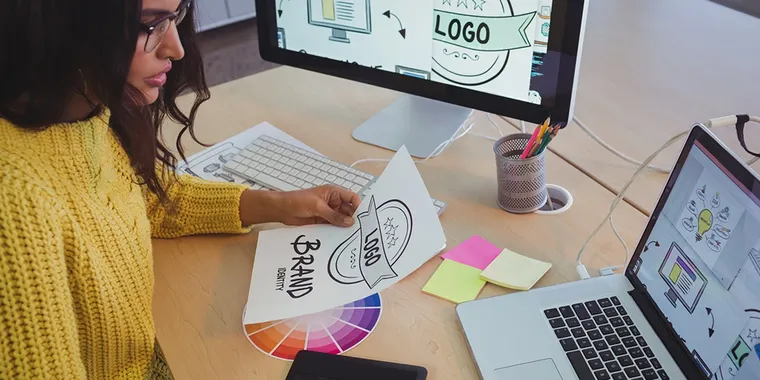
A successful logo rebrand does two things at once: it refreshes the look and keeps what customers recognize. If you only manage the first, you lose the recognition your brand has spent years building.
In this guide you get a rebranding checklist, the principles behind good logo design, logo redesign examples, and what you need to know in 2026 about AI-generated logos, copyright and trademarks. We also show what we kept and what we changed when mementor.no got its new look in July 2026.
What You Will Learn in This Post
- When a rebrand is the right move, and when small adjustments are enough
- A rebranding checklist from mapping to launch
- Logo redesign examples, including our own
- The principles behind logos that last
- Practical requirements: file formats, variants and dark mode
- AI logos, copyright and trademark registration in 2026
- How to update your website to the new identity
Rebranding Checklist: How to Redesign Your Logo Step by Step
Follow these five steps, and you keep what works while renewing what needs it:
- Map the brand identity: Write down what the brand stands for, who it speaks to, and what makes it unique. This is the benchmark all new design is measured against.
- Decide what to keep: Find the core elements customers recognize, such as a color, a shape or a symbol. These come along, everything else can change.
- Design, test and choose: Make several drafts, feel free to use AI as an idea tool, but let a designer shape the final result. Test the drafts on real customers before you decide.
- Update all surfaces at once: Logo, website, social media, email signatures, signs and printed materials. A half-finished rebrand confuses more than it improves.
- Communicate the change: Tell customers why you are changing, and what stays the same. A blog post and an email to your customer list goes a long way.
Before launch, run through the surfaces most people forget: favicon, app icons, email signatures, invoice templates, social profile images, Google Business Profile, ad accounts, signage, vehicle graphics, packaging and the PDF templates everyone still uses. Make a list, tick them off, and set one launch date for all of them.
If you are a founder creating your first logo, the same principles apply, just without step 2.
What Is Rebranding and When Is It Necessary?
Rebranding is a process in which a company or organization changes its visual identity, usually including changes to its logo, color palette, typography, images, and sometimes even its name.
The purpose of rebranding can be to signal a change in the company's direction, appeal to a new audience, differentiate itself from competitors, or simply give the brand a modern and updated expression.
Although it may be tempting to jump on the latest trend and give your brand a complete transformation, it is important not to take the decision to rebrand lightly.
It is a time-consuming and often costly process, and if not handled correctly, it can lead to confusion among your customers and weaken your brand identity. So when is the right time for a rebrand?
There is no clear answer to this question, but here are some situations where it may be beneficial:
- Your business has changed fundamentally: If your company's mission, vision, target audience, product range, or market position has changed significantly, a rebrand may be necessary to reflect these changes.
- Your logo is outdated: Design trends change over time, and a logo that once looked modern may now seem dated. An updated logo design can give your brand a fresh and relevant look.
- Your logo is complicated or confusing: If people have difficulty understanding what your logo represents, or if it does not stand out from the crowd, a redesign may be in order.
- You want to distance yourself from negativity: If your brand has been involved in any kind of scandal, or has somehow acquired negative associations, a rebrand can be an effective way to start afresh.
Small Adjustments May Be Enough
A rebrand does not always mean a total overhaul of your visual identity. Sometimes small adjustments can be enough.
Maybe you just need to modernize your font, adjust the colors, or simplify your logo design. The most important thing is that the changes you make strengthen, not weaken, your brand identity.
We did exactly that ourselves. When we launched the new mementor.no in July 2026, the logo stayed untouched. What changed was the color palette, to light ivory, dark navy and red as the accent, and the typography, to Fraunces for headings and Instrument Sans for body text. Customers recognize us by the logo. Everything around it got calmer. The whole process is in how we built the new Mementor.
The most important question you need to ask yourself is this: Will a rebrand help my business grow and achieve its goals? If the answer is yes, it is worth considering. Contact us, and we will help you with the rebrand.
Understanding the Brand Identity
Step 1 in the checklist above is the most important one, and the one most people skip. Before you draw a single line, you need to know what the brand stands for.
Brand Identity Is More Than a Logo, a Color Palette or a Slogan
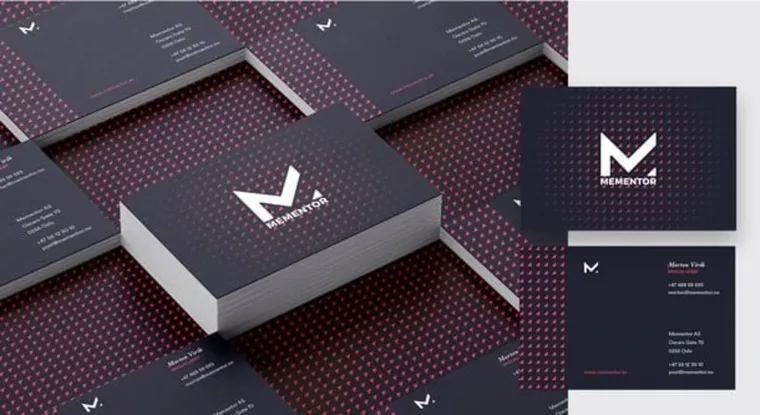
It is the sum of all the qualities, characteristics, and values that define your brand and set it apart in the market. This includes things like brand personality, value promise, and brand promises.
To identify the core elements of your brand identity, start by answering the following questions:
- What does your brand stand for? This includes your company's mission, vision, and values. What is your purpose? What are the fundamental principles that drive your business?
- What makes your business unique? What can you offer that no one else can?
- Who is your target audience? Who are the people you want to reach? What are their needs, desires, and challenges? How can your brand help them?
- How do you want customers to feel when they meet your brand? Do you want to convey a sense of luxury, fun, reliability, innovation, or perhaps something else entirely?
Once you have a clear picture of your brand identity, you can start thinking about how to reflect it in your logo.
Logo Design
Every detail of your logo, from the colors and font to the shapes and symbols, should convey your brand identity in some way.
For example, if your brand is about innovation and technology, consider using sharp, geometric shapes and cool, modern colors in your logo.
If, on the other hand, your brand is about luxury and exclusivity, consider using rich, dark colors and elegant, sophisticated fonts.
By understanding and preserving your brand identity throughout the rebranding process, your new logo will look good and still say the right thing about you.
Designing the New Logo Through Graphic Design
Creating a new logo is a balancing act. On the one hand, you want to create something fresh, exciting, and relevant to today's market.
On the other hand, you want to keep the essence of your brand and the elements your customers know and love. How can graphic design help you find this balance?
Graphic design is the art of communicating messages through visual elements such as shapes, colors, images, and fonts.
A good graphic designer can help you translate your brand identity into a visual form that is easy to recognize and remember.
Important Principles for Logo Redesign
When redesigning your logo, there are some important graphic design principles to keep in mind:
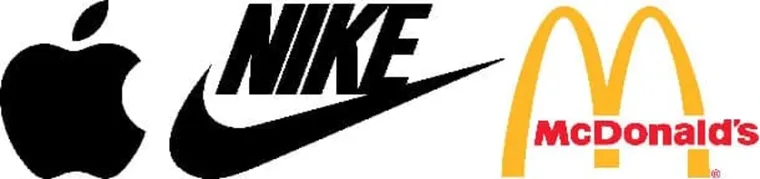
- Simplicity: The most memorable logos are often the simplest. Think of the logos of Apple, Nike or McDonald's. They are instantly recognizable and easy to reproduce thanks to their clean, simple designs.
- Scalability: Your logo should work just as well on a large poster as on a small mobile screen. This means the design should be clear and legible in all sizes.
- Timelessness: While a modern look matters, avoid getting too caught up in the latest trends. A good logo should stand the test of time.
When updating your logo, the first step is to identify the core elements that are most characteristic of your brand.
This could be a specific color, a particular shape, or perhaps a unique font. These elements should be preserved in the new design to ensure continuity and recognizability.
Modernize Your Logo
Once you have identified the core elements of your logo, you can start thinking about how to modernize the design.
This may involve simplifying a complex design, updating an outdated font, adjusting colors for better readability on digital platforms, or adding elements that better reflect where your brand stands today.
Throughout the process, work closely with an experienced graphic designer who can advise you and help you turn idea into reality.
Logo Redesign Examples
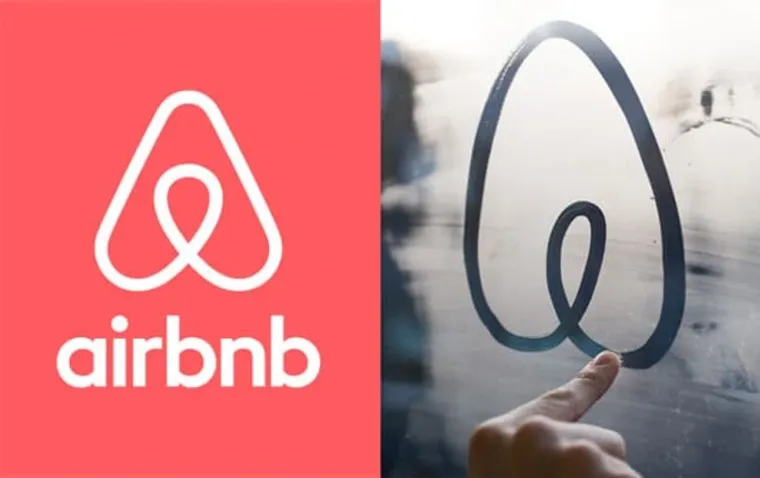
To illustrate these points, we can look at some examples of successful rebrandings. Airbnb is a good example.
They kept the basic idea from the original logo, a symbol of belonging, but simplified and modernized the design to create a logo that is both minimalist and universal.
Starbucks is another example. They removed the text from their logo to give it a cleaner and more modern expression, but kept the iconic mermaid to ensure recognition.
A Norwegian example is Equinor. When Statoil changed its name in 2018, the company also got a completely new logo, but kept a clear link to its history through the communication around the change. A full rebrand with a new name is the most demanding kind, and then step 5 in the process above means everything.
From our own client list: the coworking space The Box got its own visual identity anchored in the building's industrial history, with an icon set and a profile the team uses themselves in Elementor. There was no old logo to keep, so the job was to find the one element that would become recognizable, and build everything around it.
These examples show that with some creativity and good planning, it is entirely possible to rebrand your logo without losing your brand identity.
Visual Identity and Brand Guidelines: What Goes Beyond the Logo?
The logo is the part people see first, but rarely the part they remember best. Colors, type and the way images are used do just as much. Together this is the visual identity, and the document that describes it is the brand guidelines.
Brand guidelines for a small business need no more than this:
- Logo in every variant: full, symbol, light and dark, with rules for minimum size and clear space.
- Colors: one primary, one accent and two or three neutrals, with codes for screen and print.
- Typography: one typeface for headings and one for body text, with sizes.
- Image style: what kind of photography and illustration fits, and what does not.
- Examples of wrong use: stretched logo, wrong color, too little space. This page prevents the most arguments.
Our own guidelines are exactly that short, and they get used every time someone makes an ad, a presentation or a new page. A rebrand that stops at the logo rarely survives the next PowerPoint.
AI Logos, Copyright and Trademarks
AI tools can produce logo drafts in seconds, and many use them in 2026. Before you base your brand on an AI logo, you need to know three things:
Copyright requires human authorship. In the United States, the Court of Appeals for the D.C. Circuit confirmed in Thaler v. Perlmutter in March 2025 that a work generated entirely by AI cannot be copyrighted, and the Supreme Court declined to review the decision in March 2026. European copyright law takes the same line.
A logo made entirely by AI without human involvement may therefore have no copyright protection. In the worst case, you cannot stop others from using something similar. If a designer reworks and develops the draft, the situation changes.
Trademark registration is a separate protection. You can register the logo as a trademark independently of copyright, with the USPTO in the United States, the EUIPO for the European Union, or your national office, in Norway the Norwegian Industrial Property Office. Registration gives you exclusive rights to the logo for the goods and services you choose, and is the most important protection for most businesses.
Check that the logo can be registered. A logo that looks too similar to existing marks, or that merely describes what you sell, can be rejected. Search the trademark database in your market before you fall in love with a design.
If in doubt, talk to a designer or a patent agency before launch. It costs little compared to having to change your logo after two years.
Practical Requirements for a Modern Logo
A logo in 2026 has to work in far more places than on letterhead. Always ask the designer to deliver:
- Vector files (SVG and PDF): They scale endlessly without becoming blurry, and SVG is the standard on the web.
- Several variants: Full logo, simplified symbol and favicon. The symbol must work alone in small spaces like app icons and profile pictures.
- Light and dark versions: More and more people use dark mode, and the logo must be visible on both backgrounds.
- Clear rules: A simple brand manual with colors, spacing and incorrect use saves you a mess later.
If you are missing any of these from your previous logo, the rebrand is a good opportunity to get everything in place.
Rebranding for Web Design
After completing the logo redesign, it is time to take the rebrand one step further and update your web design.
This is just as important as the logo itself, since your website is often the first point of contact potential customers have with your brand.
Your web design must reflect your brand identity in a consistent and effective way.
Here are some steps you can take to update your web design as part of the rebranding process:
- Update the color palette: The colors in your web design should match the new colors in your logo. Colors play a big role in how people perceive your brand, so make sure they fit your brand identity.
- Update the typography: The fonts you use on your website also have a big impact on the brand experience. If you have updated the font in your logo, consider updating the fonts on your website to match.
- Update images and graphics: This includes everything from background and product images to icons and infographics. All these visual elements should follow your new visual identity.
- Improve layout and navigation: A user-friendly website is an effective website. As part of the rebrand, consider improvements to layout and navigation so visitors easily find what they are looking for.
- Communicate the rebrand: Do not forget to tell your visitors about the changes. Write a blog post or a news item explaining why you rebranded, what the changes mean, and how they benefit your customers.
More Than Appearance
An important thing to note about rebranding for web design is that it is not just about aesthetics. Of course your website should look good, but it matters even more that it works well.
Remember that the goal of a rebrand is to improve the brand experience, and that includes the user experience on your website.
A successful web design rebrand requires careful planning, creativity and technical skill. Done right, it gives your brand a fresh start and helps your business grow.
If you are considering bigger changes to your website at the same time, read our guide on how to plan a new web design.
Frequently Asked Questions
What is rebranding?
Rebranding means renewing the visual identity of a business. It can include the logo, colors, fonts, images and sometimes the name. The goal is to change how the brand is perceived without losing what customers recognize.
What does it cost to rebrand a logo?
According to ManyPixels' logo design cost guide from September 2026, freelancers charge $300 to $2,000 depending on experience, design contests start around $249, and a branding agency runs $3,000 to $10,000 or more. Adjusting an existing logo costs less than designing a new one. What agencies charge per hour is covered in our guide about marketing agency prices.
Is rebranding risky?
Yes, if you change everything at once without saying why. The risk is that customers no longer recognize you. You reduce it by keeping one core element, testing the drafts on real customers and announcing the change when it arrives. Small adjustments, like new colors around the same logo, carry almost no risk.
How can I redesign my existing logo?
Start by deciding what stays: usually the symbol, the color or the shape customers know. Then simplify what remains, update the typeface, and check the result at favicon size and on a dark background. Test two or three versions on real customers before you choose. The checklist at the top of this guide walks through it.
Can AI redesign my logo?
AI can give you drafts and directions in minutes, and that is a fine way to start. It cannot give you a logo you can protect: a design made entirely by AI has no copyright in the United States or the EU. Let a designer rework the draft, and you get both a distinctive result and something you can register.
Can I use AI to create a new logo?
Yes, for drafts and idea work. But a logo made entirely by AI without human involvement may have no copyright protection, and the result often looks like everyone else's. Let a designer rework and finish it, and you get both distinctiveness and better legal protection.
How do I protect my logo?
Register it as a trademark, with the USPTO, the EUIPO or your national trademark office. That gives you exclusive rights for the goods and services you choose. Copyright arises automatically when a human creates the logo, but trademark registration is the strongest and clearest protection.
Do I lose recognition if I rebrand?
Not if you do it right. Keep the core elements customers know, such as color, shape or symbol, and renew the rest. Communicate the change clearly, and customers will see it as an upgrade, not a new company.
Conclusion: The Future of Your Brand
Rebranding is not a task to take lightly. It requires knowing what the brand stands for, deciding what customers should keep recognizing, and updating every surface at once. Done right, it gives the brand new life without losing what has been built.
Remember that the job does not end at launch. Watch how customers react, adjust where needed, and tell them why you changed. Often the answer to whether you should rebrand is simple: keep the logo, change what surrounds it. That is what we did.
Need help rebranding your logo and website? We design visual identities and websites that fit together. See our client cases or contact us for a friendly chat.