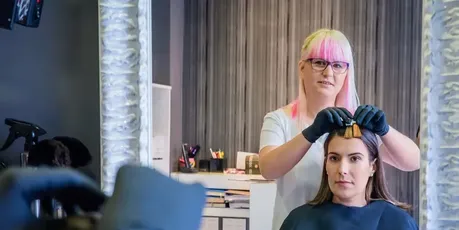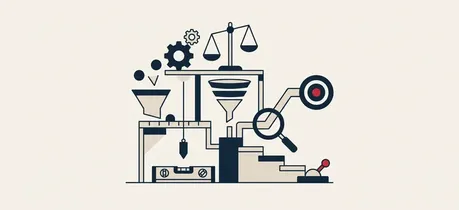
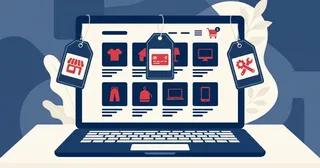

An influencer marketing strategy works when you pick creators your audience already trusts, give them room to make real content, and measure every profile separately. Trust beats reach, and the right match beats a big follower count almost every time.
The reason is simple. We trust people we follow more than ads. When a recommendation comes from someone we see as real, it feels honest, and we listen.
For businesses, influencer marketing is not about celebrity ads, but about borrowing trust from voices your audience already cares about.
This guide shows you how to choose creators, set a budget that fits a small business, follow the disclosure rules and measure the results that matter. It ends with a short, honest answer for anyone who wants to become an influencer themselves.
What You Will Learn in This Post
- What influencer marketing actually means, explained simply
- Why it works so well, with 2026 numbers you can use
- A five-step influencer marketing strategy, from goals to measurement
- How to run it on a small business budget
- What AI-generated influencers are, and when real profiles win
- How to label ads and AI content under FTC rules and the EU AI Act
- How to become an influencer yourself, without the hype
What Is Influencer Marketing?
Influencer marketing is when businesses work with people who have built trust and influence on social media. When an influencer shares a product or service they actually use, it feels more real than a regular ad. More people listen, remember and act.
It comes in many forms, from a short TikTok video to a long-term deal where the creator becomes an ambassador for the brand. It is not about reach alone, but about reaching the right audience through people who already have a relationship with them.
Simply put, you let someone who already talks to your audience share your message in their own way. That could be a local creator with a few thousand followers or a YouTuber with hundreds of thousands of subscribers.
A good influencer campaign is not about buying attention, but about borrowing trust from someone who already has it.
Why Influencer Marketing Works so Well
Influencer marketing is not a trend to follow, but a channel with measurable results. People trust people, and the numbers show it. The figures below come from reports published in 2026, so treat them as guidance, not as a promise for your campaign.
- The global market was worth 32.55 billion dollars in 2025, according to Influencer Marketing Hub, and Mordor Intelligence expects it to pass 40 billion in 2026.
- 74% of marketers plan to increase their influencer budgets in 2026 (Aspire, nearly 900 marketers and creators surveyed).
- Nano accounts on Instagram see 3.5 to 6% engagement, micro accounts 1.5 to 3.5%, and accounts with over a million followers 0.5 to 1% (Nowadays Media, 15,000+ accounts, first quarter 2026).
You will find plenty of return-on-investment figures too. Most come from companies selling influencer platforms, so we do not use them. Measure your own return with tracking per profile, and you will know what the campaign gave you.
The trend is clear: people want content that feels real, not staged. When a recommendation comes from someone you already follow, it feels more relevant than a regular ad. That is why credibility is the most valuable thing you build over time.
Influencer marketing has gone from an experiment to a fixed line in the marketing budget.
What Influencers Earn Money From
- Sponsored posts and partnerships
- Affiliate links and discount codes
- Sales commission from their own online stores
- Events and brand ambassador deals
- Content creation for brands
Most influencers combine several of these. Some live off steady partnerships with a few brands, others get paid per view, click or sale. Affiliate links and discount codes make results traceable, so both the business and the creator see what works.
Many also build their own brands, like clothing, makeup or digital products, and use their channel as the main sales platform. The influencer becomes both marketer and business owner.
What they all have in common is that the income comes from trust. The more real and relevant the profile feels, the more the partnership is worth.
An Influencer Marketing Strategy in Five Steps
A working influencer marketing strategy has five parts: clear goals, the right creators, creative freedom, several channels and measurement per profile. Skip one, and the other four get harder to judge.
1. Set Clear Goals
Decide what you want: visibility, clicks, sales or new followers. Pick one or two main goals and make them measurable, for example "30% more trial orders from the campaign landing page" or "cost per sale under $15 from the discount code". Our guide to marketing for service businesses goes deeper on goal setting.
- Visibility: views and view frequency
- Engagement: interactions divided by followers or views
- Traffic: clicks, click-through rate and time on page
- Sales and leads: conversion rate, cost per sale, return on ad spend and code redemptions
2. Pick the Right Influencer
Look at values, audience and engagement, not just follower count. The right match beats big reach almost every time.
- Audience match: age, gender, location and interests
- Engagement quality: comments and shares matter more than likes
- Content style: does the tone and format fit your brand?
- Trust: real history, steady quality and no bought followers
3. Let the Influencer Be Creative
Give a clear brief with goals, message and boundaries, then let the creator tell the story their own way. Real, personal content converts better than scripted ad copy.
- Share the main message and the points that must be there: price, offer and deadline
- Avoid word-for-word scripts. Ask for natural language and their own examples
- Agree on approval before publishing, and do one round of feedback
4. Combine Channels
Use TikTok, Instagram and YouTube together. Different formats build trust over time and reach your audience in different situations. Read more about how to measure digital marketing results.
- Short video on TikTok, Instagram Reels and YouTube Shorts for attention and pace
- Stories for closeness and direct response
- YouTube for deeper explanation and product demos
- Extend the lifespan: repost, cut into ads and build highlights
5. Measure Results per Profile
Track what matters for your goal, and make tracking easy. Use a dedicated landing page, UTM parameters and a discount code per influencer. Compare the profiles against each other, and learn for the next round.
- UTM tracking on every link and a separate campaign link per profile
- A discount code per influencer, so you can tie sales to effort
- Watch both early signals, like engagement, and late signals, like sales and leads
- Review 7 to 14 days after the last post for a fairer picture
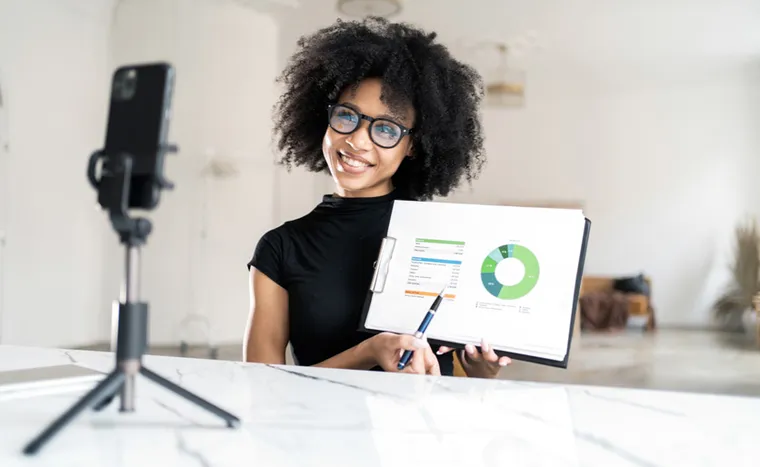
The recipe is simple: clear goals, the right profile, real content, several channels and consistent tracking. Do this every time, and results improve with each campaign.
Micro and Nano Influencers: Small Accounts, Big Results
Micro and nano influencers often work better than big accounts because the relationship with followers is closer. The audience knows the person, trusts the recommendation and takes the time to read, comment and try what is recommended. For a local business, that can be the difference between visibility and actual sales.
A nano influencer typically has between 1,000 and 10,000 followers. A micro influencer has between 10,000 and 100,000. The thresholds vary a little between sources, but the principle holds: fewer followers, closer relationship.
The shift is international. More than half of marketers now work mostly with nano and micro influencers, 27% with each group, according to Aspire (January 2026).
- Trust first: small accounts build relationships over time, and recommendations feel like advice from a friend.
- Higher engagement: fewer followers, but more real comments, shares and saves.
- Relevance: a local audience and clear niches hit the target better.
- Better value: lower cost per piece of content, and often lower cost per sale.
- Scalable: several small accounts at once give broader coverage without losing trust.
A nano influencer's followers often know them personally, and that creates very high trust.
Look at the TikTok numbers in the same benchmark: nano accounts see 9 to 15% engagement, accounts with over a million followers 1 to 3%. Ten small profiles therefore often produce more real reactions than one big one, at a lower price and with one discount code per profile to measure on.
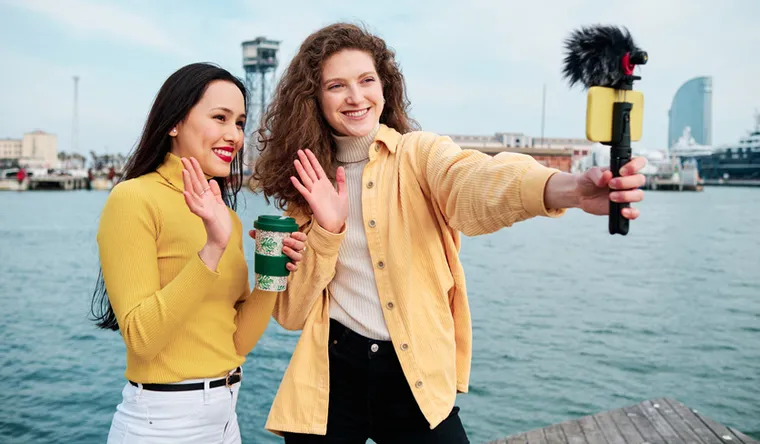
Influencer Marketing for Small Businesses
You do not need a big budget. You need a small number of creators whose followers look like your customers, and a way to see what each of them brought in.
A first campaign that fits most small businesses looks like this. Pick five to ten nano or micro creators in your niche or your area. Offer the product plus a modest fee, never product alone if you expect real work. Give each creator their own discount code and link. Run it for four weeks, then compare the codes.
Three things decide whether it pays off. The landing page has to load fast on a phone and show the offer immediately. The code has to be easy to remember. And you have to wait 7 to 14 days after the last post before you judge, because followers do not all buy on day one.
Once you know which two or three creators deliver, sign them for a longer deal. Repeat partnerships beat one-off posts, because the audience needs to see the brand more than once before it trusts the recommendation.
AI-Generated Influencers and Virtual Profiles
AI-generated influencers are digital characters that act like real profiles on social media. A virtual profile has a name, a face and a personality, but the person does not exist. The content is made with artificial intelligence and 3D graphics.
Such profiles can work for brands that want full control of expression and message. A virtual character never gets sick, never says anything unfortunate and can be adapted to every campaign. For fashion, gaming and tech it can give a clear, recognizable style.
The market grows fast. Estimates for virtual influencers in 2026 range from 12 to 16 billion dollars depending on who counts. The Business Research Company sits at the top with 15.9 billion. The format is strongest with young audiences. That makes the trend worth following, but it does not change our advice about trust.
Virtual profiles also have a clear weakness. They cannot try a product, and they have no personal experience to share. Influencer marketing is built on the opposite: a real person recommending something they actually use. That trust is hard to create with a character.
Our advice is to use AI-generated profiles as a supplement, not a replacement. They can create attention around a launch, but few people buy because of a recommendation from someone who does not exist. Choose real profiles when the goal is trust and sales.
From August 2, 2026, the EU AI Act requires clear labeling of AI-generated or AI-manipulated content that looks real. Label virtual profiles and AI content clearly, wherever you publish.
Three Campaign Setups You Can Copy
Below are three setups for different industries. We give no results. We have no influencer campaigns of our own to show numbers from, and numbers from other people's campaigns say little about yours. What you get is the setup and what to measure.
1. Local Restaurant and TikTok Creator
- Starting point: a new weekend menu that needs quick attention in the local area.
- Setup: work with a local TikTok creator who makes honest food reviews. Two videos, one restaurant visit and a simple discount code in the bio. Read more about local SEO to reach customers in your area.
- Measure this: views on the videos, reservations the week after against the week before, and how many tables used the code.
2. Clothing Brand and Micro-Influencers
- Starting point: launch of a capsule collection on a limited budget.
- Setup: ten micro-influencers with 5,000 to 25,000 followers each. Natural Reels and Stories, with unique tracking links and codes per profile.
- Measure this: engagement per profile against your own earlier posts, cost per sale per code, and whether sales hold up beyond the first week.
3. Tech Product and YouTube Review
- Starting point: a product with several features that needs explaining.
- Setup: work with a YouTuber who makes detailed reviews. One main video, clips for Shorts, and a link with UTM and a coupon code.
- Measure this: sales during the campaign against a normal period, time on the landing page from the UTM link, and the return rate on purchases with the coupon code.
Pick the right format for the message, use clear tracking per profile, measure both engagement and sales, and scale what works.
Common Mistakes to Avoid
Most mistakes in influencer marketing come from poor preparation, not from picking the wrong person. Avoid the points below, and a small budget goes a long way.
- Choosing by follower count: big profiles look impressive, but low relevance gives few sales. Look at audience and engagement first.
- Controlling the content too hard: finished scripts weaken credibility. Set boundaries, and let the creator use their own voice.
- Forgetting tracking: without UTM links and separate codes, you never know what the campaign actually gave.
- Measuring too early: many conclude after one day. Wait 7 to 14 days before you judge the result.
- Sloppy disclosure: missing labels weaken trust and can draw a reaction from the regulator.
- Running only one campaign: trust builds over time. Steady partnerships beat scattered one-off posts.
Disclosure Rules: FTC, EU and Local Regulators
All paid partnerships must be clearly labeled. The goal is that people understand right away that the content is advertising, and who paid for it. Clear labels build more trust over time, and make it easier to measure real results.
The rules differ by country, but the principle is the same everywhere. Three sets of rules cover most businesses reading this guide.
United States: The FTC Endorsement Guides
The FTC's guidance for social media influencers requires a disclosure whenever there is a material connection: payment, free or discounted products, or a personal or family relationship with the brand. The disclosure has to be hard to miss and placed with the endorsement itself, not on a profile page or behind a "more" link. Plain words like "ad" or "sponsored" work. Vague tags like "sp" or "collab" do not.
In video, say it and show it on screen, because many people watch without sound.
European Union: The AI Act From August 2, 2026
For AI content, new requirements arrived in 2026. Article 50 of the EU AI Act requires, from August 2, 2026, that AI-generated images, audio and video that look real are clearly labeled. If you sell to customers in the EU, this applies to you no matter where your business is based.
The rules reach further than influencers. See which AI rules apply to marketing, from privacy to labeling images.
Local Regulators: Norway as an Example
Most countries also have a consumer authority with its own guidance. Norway's Consumer Authority updated its social media guidance on May 18, 2026, and now accepts only the words "Reklame" and "Annonse" (advertising) as clear enough. "Sponsored", "collab" and "gifted" are advised against. Norway also has a retouching rule: if a body's shape, size or skin is altered in an ad, including with AI, the ad must carry a standard label. Check the equivalent rules in the markets you sell to.
Our advice is simple: label all AI content now, regardless of deadlines. Nobody should think they see a real situation when the content is artificial. Transparency costs little and builds trust.
- Always label: use clear text like "Ad" or "Sponsored" at the start of the post, video or title.
- Visible everywhere: label both in the content itself and in the caption. In video, say it out loud and show it on screen.
- Who is the advertiser: name the brand you work with, for example "Ad for Mementor".
- Gifts and discounts: gifts, discounts and commission require a label too.
- Platform tools: use "paid partnership" where the platform offers it, in addition to clear text.
- Children and vulnerable groups: be extra careful with audiences under 18, and avoid products that do not fit them.
- Archive and editing: do not remove labels in archived highlights or re-uploads. The label follows the content.
- Contracts and documentation: put the labeling requirement in the contract, agree that the creator discloses AI-made content, and ask for screenshots that show it was done right.
Clear labeling creates transparency, which leads to more trusted content, better response and more consistent results over time.
How Mementor Can Help
We do not sell influencer sourcing. What we do is make sure the campaign lands somewhere that converts, and that you can measure what it gave you. See how we work with marketing that delivers results.
- A landing page that converts: one page per campaign with the offer, the code and one clear next step, built for phones because social traffic is almost entirely mobile.
- Tracking that works: UTM setup, goals in GA4 and discount codes per profile, so you see what each creator actually delivered.
- Connection to other channels: influencers create demand, while SEO and Google Ads capture it when people search for your brand afterwards.
- Visibility in AI answers: influencer mentions show up more and more often in AI answers. With AEO we make sure your brand gets cited when customers ask ChatGPT or Google for recommendations.
Contact Mementor for a no-obligation chat
Stats and Trends You Should Know
The numbers below give a quick picture of what drives results. Use them as guidance when you prioritize profiles, formats and budget.
| Topic | Stats | Source |
|---|---|---|
| Market | Global market of 32.55 billion dollars in 2025, expected to pass 40 billion in 2026 | Influencer Marketing Hub, Mordor Intelligence |
| Budgets | 74% of marketers increase their budgets in 2026 | Aspire, State of Influencer Marketing 2026 |
| Small accounts | More than half work mostly with nano (27%) and micro (27%) influencers | Aspire 2026 |
| Engagement | Instagram: nano 3.5–6%, micro 1.5–3.5%, mega 0.5–1%. TikTok: nano 9–15%, mega 1–3% | Nowadays Media, 15,000+ accounts, Q1 2026 |
| Regulation | EU labeling requirement for AI content applies from August 2, 2026 | European Commission, AI Act art. 50 |
Read the numbers in light of your niche and your audience. Micro accounts often give the highest engagement, but the right mix of profiles and formats gives the most consistent results over time.
Practical tip: test several small accounts at once, use clear tracking per profile, and optimize for both engagement and sales.
How to Become an Influencer
This guide is written for businesses. Still, Search Console shows that most people who find it in Google searched for how to become an influencer: 1,414 impressions in 90 days from that one query. So here is a short, honest answer.
There is no shortcut. The people who make it mostly do the same things:
- Pick one topic you know better than most people, and stick to it.
- Post consistently, preferably short video, for at least six months before you judge whether it works.
- Answer comments and messages. Engagement is what brands pay for, not the follower count.
- Label every paid post as an ad from the first deal. The FTC rules apply to you at 1,000 followers too.
- Set a price and sign an agreement before you deliver, also when the payment is a free product.
With 1,000 to 10,000 followers you are a nano influencer. That is the segment most brands are expanding in 2026. Small, engaged accounts get deals. Big, quiet accounts do not.
Frequently Asked Questions
What does influencer marketing cost?
Prices typically range from about $100 to $10,000 per partnership, depending on follower base, reach, deliverables and deal type. Micro accounts often give the best return because engagement is higher and the audience more relevant. Wondering about agency costs? Read our guide to marketing agency prices.
What is the best strategy for influencer marketing?
Five to ten small creators whose followers look like your customers, a discount code per creator, a landing page built for phones, and a review 7 to 14 days after the last post. Sign the two or three that deliver for a longer deal. That beats one big profile and one post almost every time.
What are the three R's of influencer marketing?
Reach, relevance and resonance. Reach is how many people see the content, relevance is how well the audience matches your customers, and resonance is whether the audience actually reacts and acts. Most businesses overweight reach. Relevance and resonance are what bring sales.
How many followers should an influencer have?
There is no single right number. Micro influencers with 10,000 to 100,000 followers often deliver higher engagement and lower prices than large profiles. Choose a profile based on how relevant the audience is, not follower count alone.
Do influencer collaborations have to be labeled?
Yes. All paid collaborations must be clearly labeled as advertising, also when the payment is free products, discounts or commission. In the US the FTC enforces this, in the EU national consumer authorities do, and the EU AI Act adds labeling of AI-made content from August 2, 2026.
Do influencers get paid?
Yes, in money, free products, commission or a mix. Nano creators often start with product plus a small fee. Micro creators charge per post or per campaign. The largest accounts negotiate ambassador deals. Whatever the payment is, it has to be disclosed.
Can I get paid with 500 followers?
Sometimes, usually in products rather than money. Brands look at engagement and audience fit before follower count, so a 500-follower account in a tight niche can get product deals. Paid work usually starts in the nano tier, from about 1,000 followers.
Which platform works best for short video?
TikTok and Instagram Reels work very well for short-form content and quick attention. YouTube fits longer content, product demos and purchase-focused reviews. Choose the format based on your goal: visibility, traffic or sales.
How do I measure results?
Use UTM codes on all links, a dedicated landing page per campaign and unique discount codes per profile. Track both early signals, like views and engagement, and late signals, like leads and sales.
What is the difference between nano, micro and macro influencers?
A nano influencer typically has 1,000 to 10,000 followers, a micro influencer 10,000 to 100,000, and a macro influencer more than 100,000. Small accounts often give higher engagement and lower prices. Large accounts give the widest reach.
Does AI-generated content in ads need labeling?
Yes, in practice. The EU AI Act requires, from August 2, 2026, that AI content that looks real is clearly labeled. Several countries also have retouching rules that apply when a body is altered in an ad, including with AI. Label all AI content and you are on safe ground.
Summary
Influencer marketing is not about the biggest reach, but about trust. Pick the right creators, give room for real content and measure every profile, and you build both visibility and sales in a way that feels natural to your audience.
Start simple: test several small accounts at once, track everything, learn from the numbers, and scale what works. Contact Mementor.