

A digital marketing strategy that delivers measurable results has three parts: one clear goal, the right channels and tracking from day one. If you know what an inquiry is worth, you can calculate whether every dollar in the budget pays off.
This guide shows how to set goals you can actually measure, how SEO, Google Ads and AEO work together, and what results look like for clients we work with. You also get a one-page strategy example you can copy. Everything applies whether you do the job yourself or with an agency.
What You Will Learn in This Post
- What digital marketing is, and which channels give you measurable numbers
- How to set goals you can measure in money and inquiries
- What results look like for three of our clients, with numbers
- SEO for lasting traffic, Google Ads for inquiries from day one, AEO for citations in AI answers
- A digital marketing strategy example on one page, filled in
What Is Digital Marketing?
Digital marketing is every kind of marketing that happens online: search, ads, social media, email and now AI answers. The difference from TV, radio and print is not the screen. It is that everything can be measured, down to what one inquiry cost.
That is also the trap. Because everything can be measured, many businesses measure everything and steer by nothing. This guide is about picking the few numbers that matter, and building a strategy around them.
The Channels That Give You Measurable Numbers
- Search engine optimization (SEO): visibility in Google when people search for what you sell. The traffic has no click price, but takes time to build. Read more about search engine optimization.
- Paid advertising: Google Ads, Shopping and paid social posts. Inquiries from day one, paid per click.
- AEO (answer engine optimization): getting cited when someone asks ChatGPT or Google AI Mode. Read more about AEO.
- Social media: Facebook, Instagram, LinkedIn and TikTok, often together with creators people trust. See our guide to influencer marketing strategy.
- Email: the cheapest channel to customers you already have, and valuable for anyone about to start an online store.
- Content: guides, articles and video that answer questions. Content is what makes SEO and AEO possible.
You do not need all of them. Most small and mid-sized businesses get the most out of two channels done properly, measured every month. If you sell to other businesses, LinkedIn ads for B2B are often the second channel.
Set Goals You Can Measure
Without goals, all numbers are meaningless. Spend five minutes on this before you spend a dollar on marketing:
- Pick one main goal: more inquiries, more sales in the online store or more sign-ups. Not all three at once.
- Put a value on the goal: what is a new customer worth to you? Then you know what you can pay for an inquiry.
- Set up tracking first: create conversion events in Google Analytics before the campaigns start, such as "form submitted" and "phone number clicked".
- Decide how often you evaluate: a monthly review is enough for most. Look at cost per inquiry, not just traffic.
A quick calculation shows why the order matters. An accountant earns on average $3,000 from a new client in the first year, and one in four inquiries becomes a client. An inquiry is then worth $750. If it costs $50 in Google Ads, the answer is simple: buy more. If Google Ads is new to you, start with our beginner's guide to Google Ads.
How agencies work with the same numbers is covered in our guide about how a marketing agency measures success. If you are considering hiring an agency, you will find the checklist in our guide to choosing a marketing agency.
To see how the channels fit together in practice, Mementor is a digital marketing agency that runs SEO, Google Ads and AEO as one team.
What Measurable Results Look Like: Three Examples From Our Own Clients
Numbers from industry reports say little about your business. Numbers from clients we work with say more about what is possible when goal, channel and tracking line up. All three are published on our service pages and case studies.
| Client | Channel | Result | Basis |
|---|---|---|---|
| Stas Artist | SEO and a new website | +199% new users from organic search | Google Analytics, January to July 2026 against the same period the year before |
| VuggeBaby | Google Ads | +748% revenue from the ads | The first two months after we took over the account in March 2026 |
| Apotek for deg | Google Shopping | ROAS 10, ten dollars back per ad dollar | One year of ongoing feed, bid and keyword optimization |
What the three have in common is not the channel. It is that every sale and every inquiry is tracked to the channel it came from. Without that tracking, none of the numbers above would exist.
SEO: Lasting Traffic With No Click Price
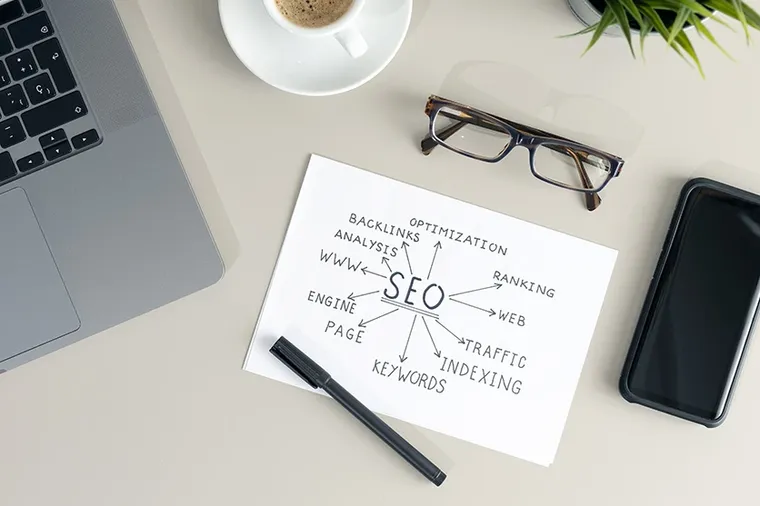
SEO is the work of becoming visible in Google when people search for what you sell. The result is traffic you do not pay per click for, and that keeps coming after the work is done. The downside is time: expect three to six months before the numbers move.
How SEO Gives Measurable Results
- Organic traffic: visits from Google, measured in Search Console and GA4. Follow the trend month by month, not day by day.
- Inquiries from organic: conversions where the channel is "organic search". This is the number that pays the bills.
- Positions on your key keywords: Search Console shows average position per query. Page two is where the quick wins sit.
- Lower ad costs: a page that ranks well organically often gets a higher quality score in Google Ads, and therefore cheaper clicks.
What Actually Moves the Numbers
- Keyword research first: find the words customers use, not the words you use about yourself. We show the method in our keyword research guide.
- Content that answers: one page per question, with the answer at the top. See our 15 SEO tips for the practical part.
- Technical foundation: fast, mobile-friendly and secure. A fast website converts better and gets crawled more often. We build web design with technical SEO built in.
- Links and mentions: how to earn them is explained in our SEO guide for beginners.
- Local SEO: essential for businesses that sell in one area. Read more about local SEO.
- Measure in Google Analytics: traffic, conversions and channel, every month.
SEO has also gained a bonus in the last two years: AI services pull their answers from pages that already rank well. Good SEO is your ticket into the AI answers too.
AEO: Get Visible in AI Answers
Search is moving. Google AI Overviews now run in more than 200 countries, and AI Mode followed through 2025. At the same time, BrightLocal measured in its 2026 consumer survey that the share of people using AI tools to find local businesses jumped from 6 to 45 percent in one year, based on 1,002 US adults. If you want measurable results going forward, you also need to be visible here.
AEO (answer engine optimization) is about getting cited when someone asks ChatGPT, Gemini or Google AI about what you sell. In practice it means:
- Answer clearly: start each page with a short answer to one concrete question, and elaborate afterwards.
- Be concrete: prices, numbers and sourced facts get cited more often than vague wording.
- Use structured data: FAQ schema and clear headings make the content easy to extract.
- Measure the effect: GA4 can filter referrals from chatgpt.com and perplexity.ai, and you can ask the AI services your customers' questions yourself every month.
Your Measurement Has to Allow for Zero Clicks
Here is an honest example from our own Search Console. The Norwegian version of this article sits at position 4.5 for the query "what are the most effective digital marketing strategies?" in its local phrasing, with 70 impressions in 90 days and zero clicks. That is not a bug. That is what AI search looks like: the question gets answered inside the AI answer, and the source gets a citation, not a visit.
So we count citations alongside clicks. As of September 12, 2026, mementor.no is cited in 83 AI answers across 26 pages, according to Ahrefs. A month earlier the number was 50. That figure sits in our monthly report next to the inquiries, because it is where more and more customers first meet us.
Want to go deeper, read our guide about AEO or see how we work with AEO for clients.
Google Ads: Inquiries From Day One
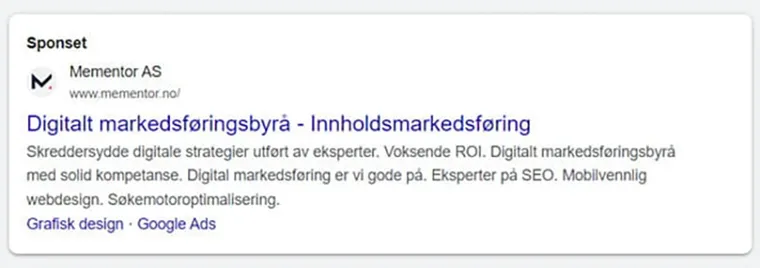
Google Ads shows your ad at the moment someone searches for what you sell, and you pay only when they click. That makes it the fastest road to measurable inquiries, and the easiest one to do the math on. Mementor is a Google Partner and works with Google Ads advertising every day.
How to Set Up a Campaign You Can Measure
- Start with the keywords customers use: Google Keyword Planner shows volume and click price. Use the same list as in your SEO work.
- One ad group per service: the ad copy then matches the search, and quality scores rise.
- One landing page per ad group: the page has to deliver exactly what the ad promised, with the form or phone number visible on mobile.
- Conversion tracking before the first dollar: without it you know what the clicks cost, but not what they gave.
- Budget by the value of an inquiry: if an inquiry is worth $750, a cost per inquiry of $50 is an easy yes.
The Five Numbers You Follow
- Click-through rate (CTR): how relevant the ad is to the search.
- Conversion rate: the share of clicks that become inquiries or sales.
- Cost per conversion: the number that decides whether the campaign pays off.
- Return on ad spend (ROAS): revenue divided by ad cost. Apotek for deg reached 10.
- Quality score: Google's 1-to-10 rating of ad, keyword and landing page. A higher score means cheaper clicks.
If you run a service business, we show concrete campaign setups in our guide about marketing for service businesses. What clicks cost in different industries is covered in how much Google Ads costs.
Combine SEO, Google Ads and AEO
The three channels measure different things and work on different timescales. Google Ads gives you numbers the week after launch. SEO gives you numbers after a quarter. AEO gives you citations that build up over months. Used together, they cover the whole customer journey, from first question to order.
- Share keyword data: the words that convert in Google Ads are the words you should rank for organically. In turn, Search Console shows which words deserve ad budget.
- One text, three channels: a page written answer-first ranks in Google, converts ad traffic and gets cited by AI. One job serves all three.
- Remarketing on organic traffic: visitors who found you through search but did not get in touch can be followed up with ads. Those are the cheapest conversions you will get.
- Move the money by the numbers: once SEO starts delivering inquiries on a keyword, turn the ad budget on that keyword down and move it to where organic does not reach.
Digital Marketing Strategy Example: One Page
A strategy does not have to be a thirty-page document. The one below is the template we fill in with new clients, here completed for a fictional two-person accounting firm. Swap in your own numbers.
| Item | Example |
|---|---|
| Main goal | 8 new client inquiries per month |
| Value per inquiry | $750 ($3,000 first-year value, one in four becomes a client) |
| Maximum cost per inquiry | $150 |
| Channel 1, from day one | Google Ads on "accountant + city" and "accountant for small business", $800 per month |
| Channel 2, long term | SEO: one service page per service, one answer-first guide per month, local SEO with Google Business Profile |
| Channel 3, included | AEO: FAQ schema and sourced prices on the service pages |
| Tracking | GA4 events for submitted form and phone click, set up before the campaign starts |
| Measured | Inquiries, cost per inquiry, organic traffic and citations, first Monday of the month |
| Decision | Under $150 per inquiry: raise the budget. Over: change keywords or landing page before raising anything. |
Nine rows. That is enough strategy for most businesses under ten people, and more than most of them have.
How to Measure Every Month
The one-page strategy is worthless without a fixed routine for reading the numbers. Ours takes under an hour per client, on the first Monday of the month, and consists of five questions.
- How many inquiries came in, and from which channel? GA4 events split by organic, paid, direct and AI referrals.
- What did each paid inquiry cost? Ad spend divided by inquiries. If it sits above the limit in the strategy, we stop and fix before we raise anything.
- Is organic moving? Clicks and impressions in Search Console against last month and the same month last year. Seasonality explains more than people think.
- Which keywords sit on page two? Positions 11 to 20 are next month's content job.
- Are we getting cited? The number of AI citations, and the three most important customer questions tested in ChatGPT and AI Mode.
The answers give one decision per channel: raise, hold or switch. Write the decision down with a date. Three months later, that note is what shows whether the strategy works, not gut feeling.
Two mistakes we see most often. Businesses that measure after one week and conclude, and businesses that only measure traffic. Traffic is a receipt for visibility. Inquiries are the receipt that the visibility reached the right people.
Once you measure inquiries, you can also get more of them without more traffic. Here is the method for raising your conversion rate step by step.
Frequently Asked Questions
What is a digital marketing strategy?
A digital marketing strategy is a plan for which goal you want to reach, which channels you use to reach it, how much you spend, and how you measure whether it works. It can fit on one page. The template in this guide has nine rows.
What are measurable results in digital marketing?
Measurable results are numbers you can tie directly to the business: inquiries, sales, cost per inquiry and return on investment. Clicks, impressions and followers are supporting numbers. They explain the trend, but they pay no bills.
What are the 5 main marketing KPIs?
For most small businesses: number of inquiries, cost per inquiry, conversion rate on the website, return on ad spend, and organic traffic trend. Add AI citations if you publish content. Everything else is a supporting number.
What is the 70-20-10 rule in digital marketing?
A budget rule of thumb: 70 percent on what you know works, 20 percent on promising channels you are testing, 10 percent on experiments. It is useful once you have tracking, because without tracking you do not know which 70 percent works.
What are the 5 C's of digital marketing?
Company, customers, competitors, collaborators and climate, a classic framework for analyzing the situation before you plan. It is a good checklist for the first hour of strategy work. It says nothing about measurement, which is where most strategies fail.
Which numbers should a small business follow?
Three numbers go a long way: number of inquiries, cost per inquiry and the conversion rate on your website. If you get 20 inquiries for $1,000, each inquiry costs $50. Then you quickly know whether the marketing pays off.
How do I set up tracking in Google Analytics?
Create conversion events for the actions that matter, such as a submitted contact form and clicks on your phone number. Do it before the campaigns start, not afterwards. Use a consent solution with Consent Mode v2, so the measurement follows privacy rules.
What is AEO, and do I need it?
AEO means making your content citable in AI answers from ChatGPT, Gemini and Google AI Mode. More and more customers start their purchase with an AI question, so visibility there matters more every year. The foundation is the same as good SEO.
How much should a small business spend on digital marketing?
Expect around $500 per month per channel if an agency does the job, plus any ad budget. What is normal to pay is covered in our guide about marketing agency prices.
Final Words
SEO gives you lasting traffic, Google Ads delivers inquiries from day one, and AEO makes you visible where more and more people actually ask. Every channel is measurable, and together they cover the whole customer journey.
Start with the goal, not the channel. Decide what an inquiry is worth, set up the tracking, and then pick the channels that fit your budget. Measure everything, and move the money to where the results are best.
Want help with the job, we are happy to talk. See our SEO packages and Google Ads packages, or ask for a free assessment.