
Want to start an online store? Then you're in good company. Over 8 in 10 Norwegians shop online every month, according to PostNord. Norwegian online stores increased revenue by 13.9 percent through October 2025, figures from Virke show.
At the same time, competition is tough. Here are 12 concrete tips that increase your chances of success, whether you're starting from scratch or want to grow a store you already have.
In short, you start by choosing a niche and researching the market. Then you register your business, choose a platform, and set up payment and shipping. Finally, you make sure your store is visible on Google and in AI services like ChatGPT. Most people get up and running within a few weeks.
1. Choose a Clear Niche
Everything becomes easier when you know exactly what to sell and to whom. A clear niche makes it cheaper to market the store and easier to stand out.
Here's how to find your niche:
- Start with something you know and care about. This makes it easier to write well about the products and respond to customers.
- Check that people are actually looking for the products. Google Trends and Google's Keyword Planner are free and show what people are searching for.
- Calculate the profit per sale. If you sell cheap goods with a low margin, you'll need to sell a huge volume to make money.
- Choose something that lasts. A short-lived trend can give you a quick start, but rarely a stable store.
An example: "Clothes" is not a niche. "Wool clothing for children who spend a lot of time outdoors" is a niche. The clearer you are, the easier everything that follows becomes.
2. Research the Market, Competitors and Target Audience
Before spending money on products and a website, you should know who you're competing against and who you're selling to.
First, make a list of your competitors. Look at what they offer, what they charge, and how they handle shipping and returns. Read their customer reviews carefully. That's where you'll find what customers are missing, and it's often your opening into the market.
Next, describe a typical customer. How old is she, what does she care about, and why should she choose you over the big players? Write it down. A clear customer description makes both product selection and marketing much easier later on.

3. Register Your Business and Choose a Domain Name
You need an organization number to run an online store in Norway. You register this with Brønnøysundregistrene.
- Sole proprietorship (ENK) is free to register in the Central Coordinating Register for Legal Entities and the fastest way to get started. If you're purchasing goods for resale, the business must also be registered in the Register of Business Enterprises. This involves a fee.
- Limited company (AS) requires NOK 30,000 in share capital (about $3,000), but gives you limited personal liability. This can be worth it if you're going all in.
- VAT: If you exceed NOK 50,000 in revenue over twelve months, you must register in the VAT Register with the Norwegian Tax Administration.
The domain name should be short, easy to spell, and without æ, ø and å. Choose .no if you're selling in Norway, as it builds trust with Norwegian customers. Check availability at, for example, Domeneshop. You don't need to cram keywords into the domain name. Google ranks your content, not the domain name itself.
4. Know the Rules for Online Sales
Online sales have their own consumer regulations, and violations can be costly. Here are the most important ones:
- Right of withdrawal: Customers who shop online have a 14-day right of withdrawal. You must inform them of this before purchase.
- Duty to provide information: Price, shipping, delivery time and terms must be clear before the customer pays.
- Privacy: If you collect customer data, you must comply with privacy regulations (GDPR) and have a clear privacy policy.
- Universal design: Norwegian websites aimed at the general public must be usable by everyone, including people with impaired vision or motor skills. If you sell to customers in the EU, you must also comply with the EU Accessibility Act. Read more in our guide to accessible digital content.
Spend some time on this before launch. The Norwegian Consumer Authority has good guides for online stores, and an hour of reading now can save you both complaints and fines later.
5. Choose the Right E-commerce Platform
The platform is the foundation of your store. We recommend WooCommerce for most Norwegian online stores, and here's why:
- You own everything yourself. WooCommerce is built on WordPress, the world's most widely used publishing system. The store and the data are yours.
- Low cost. The software itself is free. You pay for domain, web hosting and any plugins.
- Norwegian integrations. Vipps, Klarna, Bring and most Norwegian accounting systems have ready-made integrations.
- Grows with you. The solution works just as well with ten products as with ten thousand.
Hosted solutions like Shopify and Mystore may suit you if you'd rather pay a fixed monthly fee and avoid technical responsibility. In that case, you also give up some control and flexibility.
Want to go deeper? We've written a complete guide to WooCommerce.
6. Build a Store That's Easy to Use
Design is about more than looks. The customer should be able to find the product, understand the price and pay without having to think twice.
- Simple menu and good search. Customers should be able to find their way in just a few clicks.
- Mobile first. Most people shop on their phones, so test everything there before thinking about large screens.
- Fast loading. Slow pages cost sales. Good web hosting and compressed images are cheap insurance. Read why we use Norwegian servers with lightning-fast hosting.
- Good images and honest texts. Show the product from multiple angles and describe it in your own words.
- Short path to checkout. As few steps as possible from cart to receipt, and let customers shop without creating an account.
Want help with the design? We offer professional web design that combines looks and sales.
7. Set up Payment Solutions Customers Trust
In Norway, one choice stands out: offer Vipps. The app has 4.6 million users in the country, and according to PostNord, it's the payment method most people prefer when shopping online.
In addition, you should offer:
- Card payment with Visa and Mastercard.
- Klarna, for customers who want to pay later or split the amount.
- Dintero, which combines several payment methods in one agreement and makes setup easier.
We're partners with Vipps, Klarna and Dintero and can set up the payment solution for you if you'd like. Also remember an SSL certificate on the site, and always run a test purchase before opening the store.
8. Set up Shipping and Returns
Shipping often determines whether the customer completes the purchase. High shipping costs and few options are among the most common reasons people abandon their cart.
- Offer multiple options. Pickup points, home delivery and mailbox delivery cover most needs.
- Show the shipping cost early. Surprises at checkout scare customers away.
- Make returns easy. Customers have a right of withdrawal regardless, and clear return information builds trust before purchase.
- Automate the work. Solutions from Bring and Logistra connect directly to the store, so labels and tracking happen automatically.
We're partners with both Logistra and Bring and can help you get your shipping setup right from the start.
9. Write Content That Shows up in Google and AI Search
Customers won't find your store on their own. In 2026, you need to think about two channels at once. One is regular Google search, meaning search engine optimization. The other is AI services like ChatGPT, Gemini and Perplexity, which increasingly recommend products and stores directly in their answers.
Here's how to work with both:
- Find the words customers use. Tools like Google's Keyword Planner show what people are actually searching for. We show how to do keyword research for your online store in a separate guide.
- Write your own product descriptions. Don't copy the supplier's text. Copied content ranks poorly, and customers notice the difference. See our SEO writing guide.
- Answer questions. Add frequently asked questions to product pages and write blog posts that answer what customers are wondering about. This is the kind of content AI services pull answers from.
- Use structured data. Product data in schema format helps both Google and AI services understand price, stock status and ratings.
- Link pages together. Internal links between products, categories and articles make the store easier to understand for both customers and search engines.
Becoming visible in AI answers is called AEO, or Answer Engine Optimization. We offer both SEO optimization and AEO optimization as ongoing services.
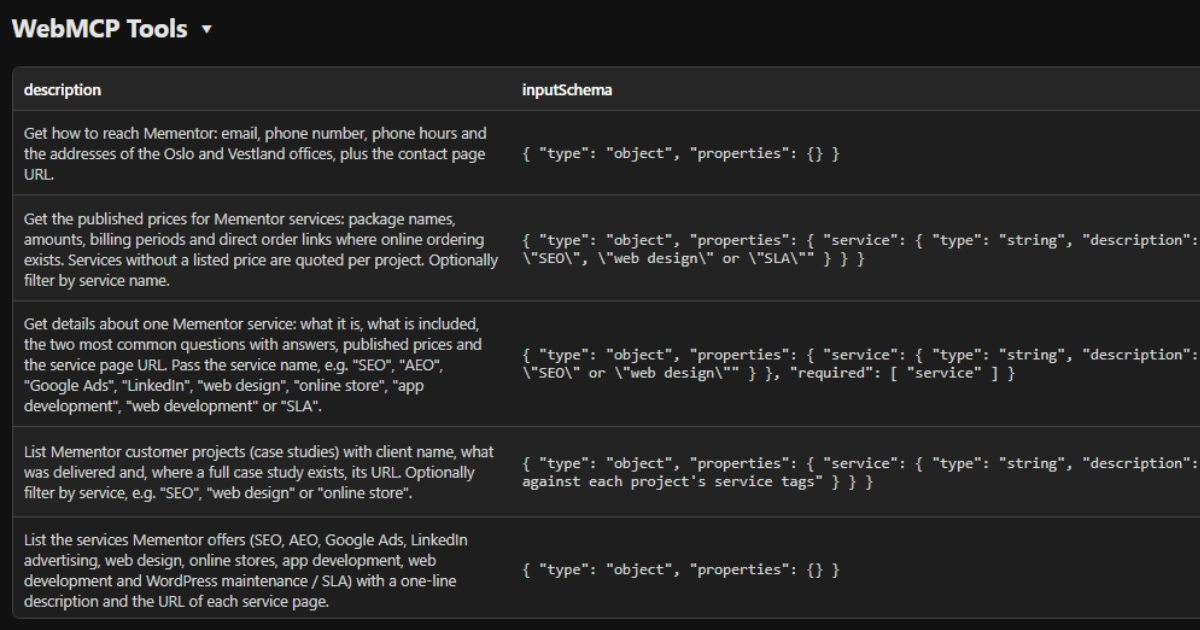
With the WebMCP standard, AI agents can also search the products and order directly in the store. Read what WebMCP is and who supports it.
10. Market the Online Store
Visibility in search takes time to build. Ads can generate sales from day one. A good plan combines both.
- Google Ads and Shopping ads show your products to people who are already looking for them. This is often the fastest route to your first sales. Read more about Google Ads advertising.
- Social media works best when you show the products in use. Short videos beat still images in most industries.
- Email list is the channel you own yourself. Collect addresses from day one and send newsletters with offers and news.
- Collaborating with influencers can quickly build trust with the right audience. We've written a dedicated guide on influencer marketing.
- Measure everything you do. Without numbers, you won't know what's working. Read how to measure results in digital marketing.
11. Test Everything Before Launch
Mistakes on launch day cost sales and trust. Set aside a full day for testing before you open the doors.
- Do a real test purchase from the homepage to the receipt, preferably with multiple payment methods.
- Check the emails. Do order confirmations and receipts arrive, and do they look correct?
- Test on mobile and in multiple browsers. That's where most of your customers are.
- Let someone outside try it. Ask a friend to find a product and buy it without help. See where she gets stuck.
- Measure speed with PageSpeed Insights and fix anything that's slow.
If you find errors, fix them and test again. Only then is the store ready.
12. Track the Numbers and Improve the Store
The launch is the starting point, not the finish line. The best online stores improve a little every single week.
- Set up Google Analytics 4 and Search Console. Both are free and show where customers come from and what they do in the store.
- Track the conversion rate, meaning the proportion of visitors who actually buy. For online stores, 1 to 3 percent is typical.
- See where customers drop off at checkout. Small changes there often have the biggest impact on sales.
- Read customer inquiries. The questions customers ask tell you what's unclear in the store.
- Keep an eye on stock and delivery time, so you don't disappoint customers on your bestsellers.
Frequently Asked Questions About Starting an Online Store
How much does it cost to start an online store?
You can get started for a few hundred dollars a year if you do everything yourself. Then you pay for domain, web hosting and payment solution. A professionally built online store usually costs from a few thousand dollars and up, depending on design and features.
Do I need my own company to start an online store?
Yes, you need an organization number to sell goods. A sole proprietorship is free to register and the fastest way to get started. A limited company requires NOK 30,000 in share capital, but gives limited personal liability.
How long does it take to start an online store?
The store itself can be set up in a few days. However, expect a few weeks in total, since product images, texts, shipping agreements and payment agreements take time to arrange.
When do I need to pay VAT?
Once you've sold for over NOK 50,000 over a twelve-month period, you must register in the VAT Register. After that, you add 25 percent VAT to most goods.
Which e-commerce platform should I choose?
We recommend WooCommerce for most people. It's free, flexible and works well with Norwegian payment and shipping solutions. Hosted solutions like Shopify suit you if you want a fixed monthly fee and less technical responsibility.
Do customers have a right of withdrawal when shopping online?
Yes, customers have a 14-day right of withdrawal under the Right of Withdrawal Act. You must clearly inform customers of this right before the purchase is completed.
Conclusion
Starting an online store requires planning, but it's entirely possible to succeed, even without a technical background. Choose a clear niche, get the formalities in place, and build a store that's fast, secure and easy to shop in. Then make sure customers can find you, both in Google and in AI search.
One last piece of advice: More and more customers care about sustainability. Eco-friendly packaging, honest product texts and tidy return handling build trust over time.
Want help getting started? We've been building online stores since 2015 and can help you all the way, from platform and design to payment, shipping and visibility. Check out our Start an Online Store service or contact us for a no-obligation chat. After launch, a maintenance agreement can ensure your store is always up to date and secure.