
AEO determines whether ChatGPT, Google AI Overviews, and Perplexity cite you as a source. This guide shows what works in 2026, from answer-first structure and schema to E-E-A-T. You'll also learn which old advice you can safely drop.
Search is changing faster than it has in years. AI engines deliver ready-made answers with just a few selected sources, and more and more users never click through.
This work builds on traditional SEO, but requires a different way of structuring content. Let's start with what AEO actually is.
In Short
Answer engine optimization (AEO) is the work of structuring content so AI engines like ChatGPT, Google AI Overviews, and Perplexity can extract your answers and cite you as the source. The core is answer-first structure, schema markup, verifiable sources, and clear information about who is behind the content.
What Is AEO (Answer Engine Optimization)?
AEO stands for Answer Engine Optimization. It means structuring content so that AI answer engines can extract precise answers and cite you as a source.
AI search engines deliver ready-made answers directly to the person asking, with only a few selected sources. If you don't make it among the sources, you're invisible to that user.
An AEO strategy includes answer-first structure, structured data (schema markup), clear questions and answers, and content that demonstrates documented experience. The goal is to give AI engines enough context to understand who you are, what you know, and why your answer specifically deserves a place.
AEO vs SEO: What Is the Difference?
SEO gets a page to rank. AEO gets it cited in the answer. AEO does not replace SEO, it sits on top of it: a page that is not indexed, fast and helpful never gets cited. The short version:
| SEO | AEO | |
|---|---|---|
| Goal | Rank high in search results | Get cited in the AI answer |
| Measured by | Positions and clicks | Citations and AI traffic |
| Key actions | Keywords, technique, and links | Answer structure, sources, and clear attribution |
| You win when | The reader clicks your link | The AI chooses you as a source |
AEO and GEO: What's the Difference?
The terms are often used interchangeably, but it's useful to distinguish between them. AEO targets direct answers in search surfaces like Google AI Overviews and featured snippets. GEO (Generative Engine Optimization) targets standalone AI platforms like ChatGPT, Claude, and Perplexity, where the answer is generated without a traditional results page.
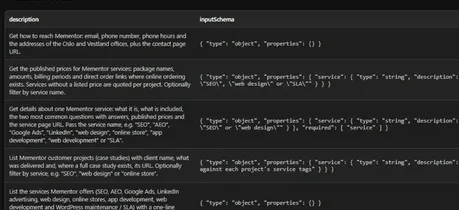
A related and newer track is WebMCP, where the website gives AI agents tools they can use directly in the browser. We explain what WebMCP is and how we built it into mementor.no.
In practice, the work overlaps. Well-structured content with clear sources wins in both channels. We use AEO as an umbrella term in this guide. You will also see the same work called LLM SEO, GEO or AI search optimization. The acronyms differ, the job is the same.
Why AEO Matters Now
The numbers show the shift is underway, but still early. AI referral traffic accounts for 1.08 percent of all web traffic across industries, according to Conductor's 2026 benchmark report. The share is growing by around 1 percent every month.
ChatGPT accounts for 87.4 percent of this traffic. Meanwhile, every fourth Google search triggered an AI summary in Conductor's analysis of 21.9 million searches in the fall of 2025.
The platforms behave differently. ChatGPT drives the most traffic, but Perplexity shows its sources more visibly inside the answer, and the two often pick different pages. In our own numbers, Perplexity cites eight of our pages and ChatGPT four. That is why you should target both, not just the largest one.
This has two consequences. You get fewer clicks on traditional rankings, and the value of being cited in the answer itself increases. Businesses positioning themselves now are building a lead that will be expensive to catch up on later.
The Key Changes in 2026
AI Search Is Now Worldwide
AI search is no longer a US phenomenon. Google launched AI Overviews in the US in May 2024, and they have since rolled out to more than 200 countries and territories in over 40 languages. AI Mode followed with a US rollout in May 2025.
Wherever your customers are, ready-made AI answers are already part of their search results.
Smaller language markets are the big opportunity in this shift. Outside English, in markets like Norway, many websites still lag behind on structure and sources, so the bar for becoming a preferred source is lower for a while longer. If you publish in several languages, start where the competition is weakest and win the citations there first.
AI Overviews and AI Mode
Google shows AI-generated summaries at the top of an increasing number of searches, and AI Mode makes search conversational. Google is clear on one thing: there is no separate schema or dedicated AI file required to appear in AI Overviews.
Standard indexing, technical quality, and helpful content remain the foundation. AEO adds three things on top of this foundation: answers that can be lifted out directly, sources that can be verified, and clear information about who is behind the content.
ChatGPT, Perplexity, and Citations
AI platforms source content differently. ChatGPT relies partly on the Bing index, while Perplexity crawls the web itself. What they have in common is a preference for content with clear structure, concrete facts, and clear attribution.
In February 2026, Bing Webmaster Tools launched a dedicated AI report showing which pages are cited in Copilot and Bing. The report was expanded in June 2026 with citation share and competitor comparisons. ChatGPT also builds product discovery on structured product feeds.
Make sure your website is open to AI crawlers in robots.txt, unless you have a good reason to block them.
Voice Search
Voice search is no longer a separate discipline. Assistants are now built on the same language models as text-based answer engines. If you write natural questions with short, precise answers, you cover both at once.
AI Search Optimization: What Google Says
Google published its own guide to optimizing for generative AI features, last updated in July 2026. It is short, and it contradicts a lot of what is sold as AI search optimization.
- No special files or markup: "You don't need to create new machine readable files, AI text files, markup, or Markdown to appear in Google Search (including its generative AI capabilities)."
- No special schema: structured data is not required for generative AI search, and no schema type unlocks AI Overviews.
- Foundations first: indexable, fast, helpful pages, the same as for classic search.
What the guide does not say is how to get picked among the sources once you qualify. That is where answer-first structure, verifiable numbers and a named author make the difference, and that is what the rest of this guide covers.
The E-E-A-T Principles
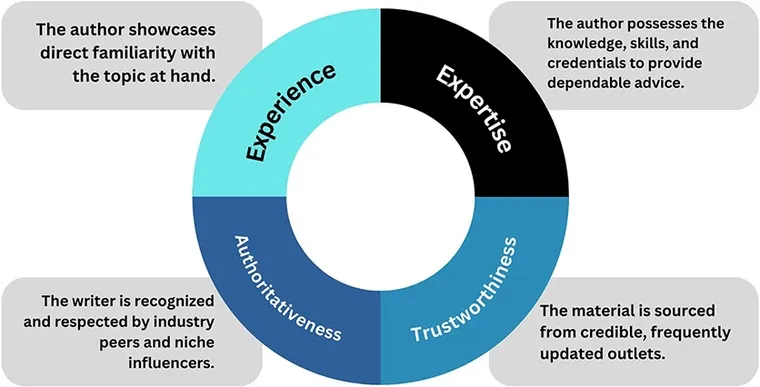
Experience, Expertise, Authoritativeness, and Trustworthiness (E-E-A-T) form the foundation for being assessed as a credible source. Both Google and AI engines weigh these signals when choosing who to cite.
The Four Signals
- Experience: Practical knowledge from your own work, demonstrated through examples and case studies.
- Expertise: Professional competence documented through author profiles and publications.
- Authoritativeness: Mentions and links from other credible sources in the industry.
- Trustworthiness: Secure connection (HTTPS), clear attribution, and clear privacy information.
Strengthen your E-E-A-T with thorough expert articles, visible authors with genuine competence, customer reviews, and technical security for your website. AI engines prefer to cite sources they can place and trust.
AEO Best Practices for 2026
Content Strategy
A well-thought-out content strategy lays the foundation for all AEO. Follow these steps:
- Map out questions: Find the questions your target audience is asking. Use Google Autocomplete, People Also Ask, and tools like AnswerThePublic. Our guide shows how to map keywords and questions systematically.
- Answer first: Provide a concise answer of 40 to 60 words at the top of each section. Elaborate with examples and figures afterward. See also our SEO writing guide.
- Update regularly: Set fixed dates for review, ideally every quarter. Fresh figures and dates increase the chance of being cited.
Technical SEO and Structured Data
Technical SEO ensures that both search engines and AI crawlers can find and understand your content. The foundation is the same: a website built for search and AI.
- Load time: Use Lighthouse to find bottlenecks. Fast pages are crawled more often and more deeply. You can also test your page for free with our SEO analysis tool.
- Structured data: Use schema for organization, author, article, and FAQ. Schema should always match the visible content on the page.
- Mobile friendliness: Test regularly on different devices and network speeds.
An important change: Google removed FAQ rich results entirely in May 2026, after limiting them to health and government sites since 2023. FAQPage schema no longer gives you expanded results in Google.
The markup is still valid and useful, but for a different reason. It's now primarily read by language models and AI crawlers, which use it to understand the questions and answers on your page.
Example of JSON-LD for FAQ:
{
  "@context": "https://schema.org",
  "@type": "FAQPage",
  "mainEntity": [
    {
      "@type": "Question",
      "name": "What is AEO?",
      "acceptedAnswer": {
        "@type": "Answer",
        "text": "AEO stands for Answer Engine Optimization. It is about structuring content so AI answer engines like ChatGPT, Google AI Overviews and Perplexity can extract precise answers and cite your website as the source."
      }
    },
    {
      "@type": "Question",
      "name": "Why is AEO important?",
      "acceptedAnswer": {
        "@type": "Answer",
        "text": "More and more users read AI-generated answers without clicking through to websites. If you are not cited as a source in the answer, you are invisible to these users. AEO gives increased visibility, more qualified visits and stronger authority."
      }
    },
    {
      "@type": "Question",
      "name": "What is the difference between AEO and SEO?",
      "acceptedAnswer": {
        "@type": "Answer",
        "text": "SEO is about ranking in traditional search results. AEO is about being cited in AI-generated answers. AEO builds on the SEO foundation but adds answer structure, source references and clear entities."
      }
    }
  ]
}
Always validate the code in the Schema.org validator before publishing.
Make Your Brand Clear to the Machines
An entity is something a machine can recognize as one specific thing, for example a company, a person, or a product. AI engines prefer to cite sources they can place. That's why information about your business must be consistent everywhere.
- Organization schema with sameAs: Add links to your profiles on LinkedIn, Proff.no, and other places your business is mentioned. This helps machines understand that everything relates to the same company.
- Same name, address, and phone number everywhere: Check that the information is identical on your website, in Google Business Profile, and in directories. Read more in our guide to local SEO.
- Visible authors: Give each article an author with their own profile page and Person schema. Real names and genuine competence add weight.
- Mentions in credible sources: If you're mentioned in industry media and reports, AI models link your brand to your field of expertise.
Link Building
Quality links from relevant websites strengthen your authority. For AI engines, mentions without links also count. If your brand is mentioned in expert articles, reports, and industry media, the chances increase that AI models will associate you with your field.
- Natural link building: Write guest articles for industry publications. Stick to one or two links back to your own resources.
- Internal linking: Connect related content across your own pages. Thematic clusters make it easier for AI engines to understand what your website is an authority on.
- Build relationships: Participate in webinars, podcasts, and industry groups. Citations from such arenas provide both links and mentions.
- Monitor your link profile: Use Ahrefs or Moz to track new links. If you get many low-quality links, you can ask Google to disregard them using the disavow tool in Search Console.
User Experience (UX)
Good UX helps readers understand content quickly. This reduces bounce rate and increases time on page, both important signals.
- Clear headings: Phrase h2 and h3 headings as questions or actions, for example "How to implement JSON-LD?". This helps both readers and machines scan the page.
- Clear calls to action: Place a link to the next step after each main section, for example to a checklist or a related guide.
- Visual hierarchy: Use bold text and boxes to highlight key information in long articles.
- Mobile friendliness: Give text, buttons, and links enough spacing and contrast on small screens.
Offer Your Content as Audio
More and more people are consuming expert content with their ears, while traveling or doing something else. A read-aloud feature at the top of the article lowers the barrier for long texts. It also makes content accessible to users with reading difficulties, and supports accessibility requirements.
With Text to Speech for WordPress, you add natural AI narration without any technical setup. The audio version can also be repurposed as a podcast or video, so the same content reaches more platforms.
Measurement and Analysis
Ongoing measurement shows which questions capture interest, and where you're being cited.
Before you measure, review the whole foundation with our SEO analysis guide, it covers AI visibility as its own step.
- Google Search Console: Find queries with impressions but low CTR. This is often content shown in AI Overviews without generating clicks.
- Bing Webmaster Tools: The AI Performance report shows which pages are cited in Copilot and Bing, and which questions trigger the citations. The report is free for all verified websites.
- GA4: Set up a dedicated channel group for AI traffic. Filter by referrals from chatgpt.com, perplexity.ai, copilot.microsoft.com, and gemini.google.com.
- Citation monitoring: Regularly test how ChatGPT, Perplexity, and Gemini describe your brand for key questions. Dedicated AEO tools can automate this.
- A/B testing: Test different answer lengths and headings with tools like VWO or server-side testing.
What AI Search Looks Like in Search Console
You can already see AI search in your own numbers. Search Console for this article shows queries that look nothing like typed searches: "can i use structured data to support aeo strategy?" and "aeo-specific keywords (question/answer phrasing ai engines pull from)". Nobody types that into a search box.
Most likely these are the questions AI Mode asks on the searcher's behalf, and they tell you exactly what people want to know. Filter for queries of seven words or more, and you will find yours. Each one is a question you can answer in 40 to 60 words at the top of a section.
Implementing AEO
Follow five concrete steps, from idea to ongoing improvement.
1. Map Out Questions
Gather common questions from Google Autocomplete, People Also Ask, and niche forums like Reddit. Also test the questions directly in ChatGPT and Perplexity, and note which sources are currently cited. Sort by volume and relevance.
2. Develop Answers
Write a concise answer of 40 to 60 words at the top, followed by detailed paragraphs with examples and figures. This gives machines a citable answer and readers thorough content.
3. Structure the Content
Use h2 and h3 for each question, and bullet points for step-by-step instructions. Give each question-answer pair its own section with an anchor name, so you can link directly to specific answers.
4. Implement Schema
Add JSON-LD with relevant types: Organization, Person for authors, Article, and FAQPage where appropriate. Validate with the Schema.org validator, and make sure the markup matches visible content.
5. Monitor and Update
Set up quarterly reviews of your core content. Update answers with fresh figures, add new questions, and remove outdated references. Freshness is one of the clearest signals for AI citation.
Common Mistakes to Avoid
Chasing Outdated SERP Features
FAQ rich results and HowTo rich results no longer exist in Google. Don't build your strategy around SERP features that have been removed. Instead, use questions and answers to get cited in AI-generated answers.
Believing Llms.txt Provides Visibility in Google
llms.txt is a text file meant to give AI models a tidy overview of your content. The idea sounds reasonable, but Google doesn't use it.
In June 2026, Google clarified in its own AI optimization guide that the file neither helps nor harms visibility in Google Search, including AI features. None of the major AI companies have committed to using it. You can still have the file for other systems that read it, but don't let anyone sell you llms.txt as a shortcut.
Over-Optimization
Too many question-and-answer sections on one page confuses both users and machines. Stick to five to eight questions per page, and make each answer unique and thorough.
Ignoring Mobile Users
Most people read on their phones. Ensure fast loading, good spacing between elements, and readable fonts in all question-and-answer blocks.
Lack of Maintenance
AI engines change quickly, and so do their source choices. Review your AEO content at least every quarter. Add new questions, adjust answers, and remove points that are no longer accurate.
How We Use AEO Ourselves
This website practices everything the guide recommends. Every article opens with an answer-first paragraph and an In Short box, every author has a Person schema, and the FAQ markup always matches the visible text.
We review our core articles quarterly, show the update date at the top, and put a source behind every number we cite. The advice above is not theory, it is our own routine.
The results are measurable. Ahrefs counts how many AI answers cite mementor.no. This is what it looked like one month apart:
| Platform | Aug 12, 2026 | Sep 12, 2026 |
|---|---|---|
| All platforms, citations | 50 | 83 |
| All platforms, cited pages | 23 | 26 |
| Google AI Overviews | 2 | 8 |
| Google AI Mode | 10 | 16 |
| ChatGPT | 0 | 5 |
| Perplexity | 6 | 17 |
The numbers are small. The point is the direction: 66 percent more citations in one month. Citations compound for those who start early.
A concrete example: search "søkeordsanalyse" (keyword research) in Google Norway, and the AI Overview cites our keyword research guide as a source, checked September 13, 2026. That page ranks 13th in the regular results. It got cited anyway, because the answer sits in the first 60 words of the section, the numbers have sources, and the author is named.
If you want the same routine on your website, see what is included in our AEO service. The first step is always a content audit.
Frequently Asked Questions About AEO
What does AEO optimization cost?
The price depends on your website's size and industry competition. A typical setup includes a content audit, schema implementation, and a content plan. At Mementor, the AEO Visibility Package costs $499 per month and the AEO Dominance Package $999, both with a $499 setup fee and no lock-in period. Request a specific quote based on your goals.
Do I need AEO if I'm already working with SEO?
Yes. SEO gets you rankings, but AEO determines whether you get cited in AI answers. The work overlaps, so you build AEO on top of your existing SEO foundation without starting from scratch.
What's the difference between AEO and GEO?
AEO targets direct answers in search surfaces like Google AI Overviews and AI Mode. GEO targets AI platforms like ChatGPT and Perplexity. In practice, the work overlaps, and well-structured content with clear sources wins in both channels.
Will AEO replace SEO?
No. AEO depends on SEO: a page has to be indexed, fast and helpful before any AI engine considers it as a source. What changes is where the value shows up. Fewer clicks from rankings, more value from being the cited source. Do both, in that order.
What is an example of AEO?
Search "søkeordsanalyse" in Google Norway and the AI Overview cites our keyword research guide as a source, checked September 13, 2026. The page ranks 13th in the regular results. It got cited anyway, because the answer sits in the first 60 words of the section, the numbers have sources, and the author is named.
How do I optimize for AI search?
Start with Google's own guide: indexable, fast, helpful pages and no special files. Then add what the guide leaves out: a 40-to-60-word answer at the top of each section, a source behind every number, a named author with Person schema, and a quarterly update. Measure citations per platform, not just rankings.
Do I need llms.txt to be visible in AI search?
No. Google has confirmed that its search ignores the file, including in AI features. No major AI companies have committed to using it as a signal. Spend your time on content, structure, and sources instead.
Does FAQ schema still help?
Yes, but not for rich snippets. Google removed FAQ rich results in May 2026. The markup is still read by AI crawlers and language models, which use it to understand the questions and answers on the page.
How long does it take to see results from AEO?
Expect three to six months before you see clear effects in AI citation and AI referral traffic. Fresh, well-structured content on low-competition questions can produce results faster.
How do I measure AEO results?
Track three things: AI referral traffic in GA4, brand citations in ChatGPT, Perplexity, and Gemini, and impressions without clicks in Search Console. Compare quarter over quarter.
Which tools should I use for AEO?
The free ones cover most of it: Bing Webmaster Tools shows which pages Copilot cites, GA4 tracks AI referral traffic, and Search Console reveals impressions without clicks. Add the Schema.org validator for markup. Paid AEO monitoring tools become relevant once you track many brands or markets.
Conclusion
AEO is about meeting users' questions quickly, precisely, and with documented credibility. Structure your content answer-first, use schema correctly, build E-E-A-T, and update quarterly. This increases your chances of being cited in the AI answers where your customers are actually searching.
If you want to strengthen your foundation at the same time, you'll find concrete steps in our 15 SEO tips.