


Your competitors show up on Google when people search for what you offer. You don't. The difference is usually SEO.
SEO stands for search engine optimization. It's about making your website so good that Google ranks it high in search results. That way, more customers find you, without you paying for ads.
In this guide, you'll learn what SEO is, what it costs, and how to get started. You'll also learn how AI search is changing Google in 2026.
The guide draws on over 25 years of SEO work for clients, and on the more than 1,500 analyses our tool SEO-Analyse.no has run so far in 2026.
In Short
SEO (search engine optimization) is the work of making a website more visible in search engines like Google. The goal is for the site to appear high in results when someone searches for what the business offers. Good SEO brings more visitors and more customers without advertising costs.
What Is Search Engine Optimization (SEO)?
SEO is about helping Google understand that your website deserves a top ranking. Instead of paying for ads, you improve the site so it climbs naturally in search results.
The meaning of SEO is simple: make it easy for search engines to find, understand, and trust your content.
SEO consists of three main areas:
- Technical SEO: The website should be fast, secure, and easy to use on mobile. Google prefers pages that load quickly. Much of this is SEO on the website itself, and it is decided when the site is built.
- Content: The text should answer what people are actually searching for. Use clear headings and write so everyone understands.
- Links: When other websites link to you, Google interprets that as a sign that your site can be trusted.
How Does Google Work?
Google sends out robots that read websites around the clock. The robots store the pages in a massive database called the index. When someone searches, Google ranks the pages according to how useful and trustworthy they are. What it takes for the robots to read your site is covered in our guide to technical SEO step by step.
Roughly nine out of ten searches worldwide happen on Google, according to Statcounter. That's why SEO in practice is mostly about becoming visible there.
Why Does Your Business Need SEO?
Good SEO gives you more potential customers without paying for ads. Here are the key benefits:
- More visitors: When you rank higher on Google, more people find your website.
- Better user experience: SEO makes the website faster and easier to use, which visitors appreciate.
- More qualified customers: People who find you through Google are often searching for exactly what you offer.
- Visibility in AI answers: Content that ranks well in Google is more often used as a source when AI services answer questions.
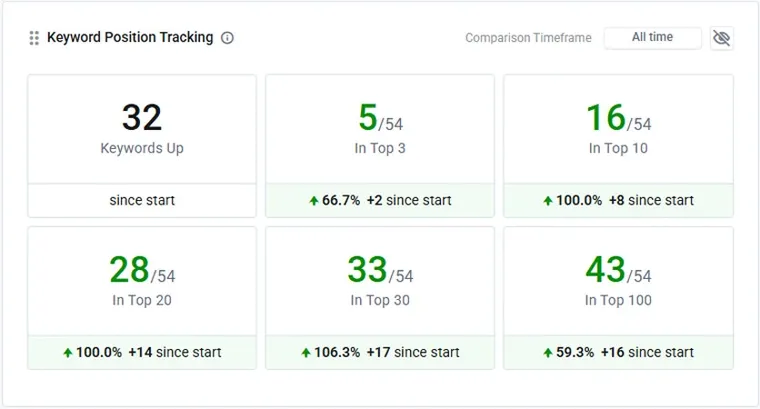
An example from our own clients: after we rebuilt stasartist.no, new users from organic search rose 199 percent in the first seven months, measured in Google Analytics against the same period the year before. That is traffic with no ad cost behind it.
What Is SEO in Digital Marketing?
SEO in digital marketing means using search engine optimization as a marketing channel: instead of paying for each visitor, you attract customers through organic search results. You reach people at the exact moment they search for what you sell, which makes it one of the most cost-effective ways to win new customers.
SEO marketing works closely with content marketing. The guides, product pages, and articles you publish are the raw material search engines rank. Paid advertising is the mirror image: visibility arrives instantly and disappears the moment the budget stops. That is why many businesses combine the channels, running ads for quick results while the organic rankings grow into a lasting asset.
Prefer a fixed monthly price for the whole job? See our SEO packages.
Get Started With SEO on Your Own
SEO doesn't have to be difficult. Start with these four steps:
- Find out what people are searching for: Use the free Google Keyword Planner tool to see which words your customers use.
- Make the website fast: Test the speed with PageSpeed Insights and fix what's slow. Read our 15 SEO tips for concrete advice.
- Write useful content: Create text that answers questions customers ask. See our SEO writing guide.
- Build trust: Get relevant websites to link to you. This strengthens your credibility with Google.
Completely new to this? Then we recommend our guide SEO for Beginners, which takes you through everything step by step.
Understand What People Are Actually Searching For
When someone searches on Google, they have a goal. They either want to learn something, buy something, or find a specific website. Your content must answer what they're actually looking for. Keyword research shows you which words your customers use, and what they are really looking for.
4 SEO Myths That Are Costing You Customers
Many businesses make these mistakes that prevent them from getting results:
- “I'll do SEO once, then I'm done.” SEO is maintenance. Google constantly changes its algorithm, so you need to keep up.
- “Just stuff keywords everywhere.” Google penalizes websites that overdo keywords. Write natural, useful content.
- “Links are the only thing that counts.” Links help, but if your website is slow or hard to use, the links won't help.
- “AI makes SEO unnecessary.” Quite the opposite. AI services get their answers from websites that already rank well. Without SEO, you won't be cited in AI answers either.
How Much Does SEO Cost?
The cost depends on how much help you need:
- Do it yourself: Free, but it requires time to learn and keep up.
- SEO tools: Google Search Console and Keyword Planner are free. Paid tools like Ahrefs and Semrush have basic plans from about $30 a month, while the full packages usually cost around $150.
- SEO agency: Most agencies charge between $500 and $5,000 per month, see our guide on SEO pricing. Our SEO packages start at $499 per month, with no binding period. See our SEO prices and packages.
By comparison, with Google Ads you pay for every single click. In competitive industries, one click can cost more than $10. That's why SEO is often more profitable over time.
Can I Do SEO Myself?
Yes, you can do basic SEO yourself. Start with these free tools:
- Google Search Console: Shows how Google sees your website and which keywords are driving traffic.
- Google Analytics: Measures how many people visit you and where they come from.
- PageSpeed Insights: Tests how fast your website is and gives concrete improvement tips.
- Google Business Profile: Important for local businesses that want to appear in maps and local searches. Read more in our guide to local SEO.
- SEO-analyse.no: Our own free tool that checks your website and shows you what to fix first. It has run more than 1,500 analyses so far in 2026.
The challenge is the time it takes to learn and stay updated. Many businesses therefore choose to let an SEO agency handle the job.
SEO vs Google Ads: What's the Difference?
Many wonder whether they should focus on SEO or Google Ads. Here are the main differences:
| Aspect | SEO | Google Ads |
|---|---|---|
| Cost model | You invest time or agency help, no cost per click | You pay for every single click |
| Time to results | 3-6 months before clear improvements | Immediate, from the day the campaign starts |
| What happens when you stop | Rankings and traffic keep working long after | Traffic stops the moment you stop paying |
| Best for | Long-term growth at a predictable cost | Quick traffic and time-limited campaigns |
Best solution: Many businesses use both. Start with Google Ads advertising for quick traffic, build SEO for long-term growth.
How Long Does SEO Take?
SEO is not a quick fix. Here are realistic expectations:
- 1-3 months: Google starts indexing your changes
- 3-6 months: You see improvements in ranking for less competitive keywords
- 6-12 months: Significant increase in traffic and more customer inquiries
- 12+ months: SEO becomes a powerful source of new customers
Patience is key. Businesses that give up after 2-3 months miss out on the biggest gains.
SEO in 2026: AI Is Changing Search
Google search looks different now than it did just two years ago. AI answers are taking up more and more space, and that affects who gets the clicks.
Here's what has happened:
- AI Overviews launched in the US in May 2024, announced by Google at I/O and since rolled out worldwide. This is the AI summary you see at the top of many search results.
- AI Mode rolled out across the US in May 2025, launched at Google I/O 2025. There you can ask Google questions in a conversational way, similar to ChatGPT. A year later it passed one billion users per month.
- Fewer people click through. A study from Pew Research shows that only 8% click on a regular search result when an AI answer appears, compared to 15% without one. Ahrefs measured a 58 percent lower click-through rate on the top result when an AI summary appears, across 300,000 keywords in December 2025.
Does this mean SEO is dead? No. AI answers are built on content from websites that rank well. Businesses cited in AI answers actually get more clicks than those that aren't.
The job has therefore become twofold. You still need to rank high on Google. On top of that, your content needs to be clear and credible enough that AI services choose you as a source. This is called AEO, or Answer Engine Optimization. Read our guide to AEO to understand how it works.
Want help becoming visible in AI answers? See our AEO optimization service.
Frequently Asked Questions About SEO
What does SEO mean?
SEO stands for Search Engine Optimization. It's the work of making a website more visible in search engines like Google, so more people find it without ads.
What does SEO do?
SEO makes your website easier to find, understand, and trust. In practice, it brings more visitors from Google without ad spend, improves speed and user experience, and increases the chance that AI answers cite you as a source. The effect builds over months and keeps working after the work is done.
How long does it take before SEO works?
Expect 3-6 months before you see clear improvements, and 6-12 months before traffic increases noticeably. Competitive keywords take longer than niche keywords.
What does SEO cost?
Norwegian agencies typically charge $90 to $200 per hour. Ongoing agreements usually run from $500 to $4,000 per month, depending on competition and scope. At Mementor, the Visibility package starts at $499 per month, with no lock-in period.
What's the difference between SEO and AEO?
SEO is about ranking high in Google's search results. AEO is about being used as a source when AI services like ChatGPT and Google's AI Mode answer questions. The two are closely linked, and good SEO work is the foundation for both.
Is SEO worth it when Google shows AI answers?
Yes. AI answers pull content from pages that rank well, so without SEO you won't be cited either. Businesses cited in AI answers get more clicks than those that aren't.
What is an example of SEO?
A concrete one from our work: when we rebuilt stasartist.no, every old URL got a 301 redirect, the site got structured data on nine page types and a dynamic sitemap, and the pages were built to load fast. New users from organic search rose 199 percent in the first seven months. That is SEO in practice: a technical foundation, content that answers the search, and trust signals, measured in Search Console and Analytics.
Can you do SEO by yourself?
Yes, for the basics. Search Console, PageSpeed Insights and Keyword Planner are free, and this guide plus our 15 SEO tips cover what to do. The line usually runs at technical troubleshooting, competitor analysis and link building, where experience and paid tools make the difference.
When should I get professional help?
Consider getting help if you don't have time to keep up to date, if your industry has tough competition on Google, or if you've worked on SEO yourself for over six months without results.
How do I know if SEO is working?
You can measure SEO success by monitoring:
- Google Search Console: Shows which keywords are driving traffic and where you rank
- Google Analytics: Measures the increase in organic traffic
- Phone inquiries and email: Ask new customers how they found you
- Local visibility: Search for your services + location name and see how high you rank
Is it safe to do SEO myself?
Yes, as long as you follow Google's guidelines. Avoid these risky techniques:
- Buying cheap backlinks from unknown websites
- Stuffing keywords everywhere without it making sense
- Copying content from other websites
- Using automated tools that promise ”quick SEO success“
Start With SEO Today
SEO is about helping potential customers find you when they need what you offer. Start simple: make the website fast, write useful content, and be patient. Results don't come overnight, but they do come.
Ready to get started? Run a free check with our tool at SEO-analyse.no or read our guide on SEO analysis.
Need Help With SEO?
We help businesses in Norway and worldwide reach the top of Google. Contact us for a free analysis of your opportunities.