


Good SEO content does two things at once: it answers what the reader wonders about, and it uses the words people search with. If you manage both, Google rewards you with better placement.
Here are ten practical tips for SEO content writing that work in both Google and AI answers, three before-and-after examples from our own pages, and the checklist we edit with ourselves. You need no prior knowledge, and every tip can be used today.
In Short
SEO writing is the craft of creating content that ranks in Google and gets cited by AI tools like ChatGPT and Gemini. It combines search intent, natural keyword use, and clear structure, so both readers and machines quickly find the answer they came for.
What Is SEO Writing?
SEO writing means creating content that people find through search. You research what they search for, answer their question clearly, and structure the page so search engines understand it. The goal is content that earns a top spot in Google and gets picked up by AI tools like ChatGPT and Gemini.
The terms SEO writing and SEO content writing describe the same craft. The principles also stay the same across formats: web content writing for SEO covers blog posts, product pages, guides and landing pages alike. What changes is the search intent behind each page, and that is where every good piece of content starts.
1. Understand Search Intent
Before you start writing, it is important to understand what users are actually looking for when they enter a specific search term. Search intent can be divided into four main categories:
- Information search: The searcher wants to learn something, for example, “how to write SEO content.”
- Commercial search: The searcher compares before buying, for example, “best SEO tools” or “Ahrefs vs Semrush.”
- Transactional search: The searcher is ready to take action, for example, “Buy SEO tools.”
- Navigation search: The searcher is looking for a specific website, such as “Facebook login.”
If your content matches the search intent, users find what they are looking for. Then Google rewards you with a higher ranking.
How to Identify Search Intent?
An easy way to identify search intent is to search for your primary keyword and analyze the results that appear. Are they mainly blog posts, product listings, or web pages? This gives you an indication of what users expect.
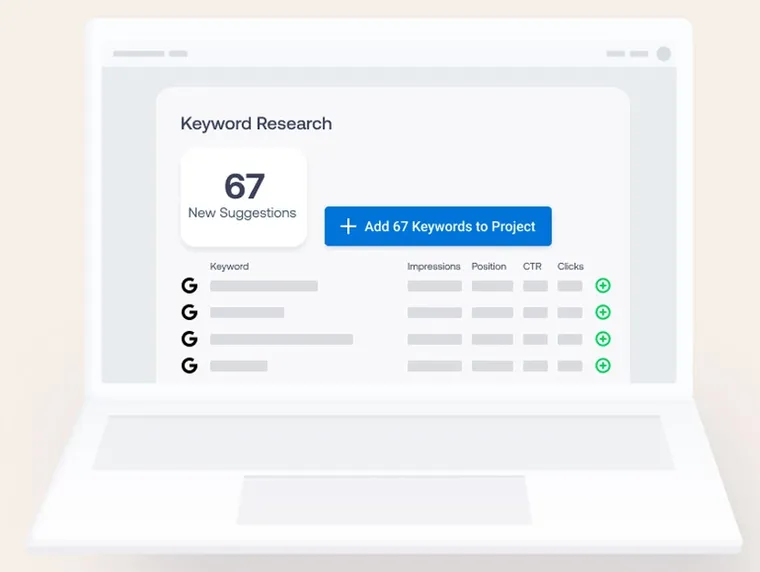
2. Do Thorough Keyword Research
Keyword research is the foundation of all SEO work. Without the right keywords, it is difficult to reach the right target audience. But how do you find the best keywords? We have collected the whole process behind thorough keyword research in a separate guide.
- Use tools: Tools such as Google Keyword Planner, Ahrefs or Ubersuggest can help you identify keywords with high search volume and low competition.
- Moz Keyword Explorer: Shows search volume and ranking difficulty, and suggests related keywords. The free version is enough to get started.
- Look for long-tail keywords: These are longer and more specific keywords that often have lower competition and higher conversion rates. Example: “how to write SEO content for beginners.”
- Analyze the competition: See what keywords your competitors are using and find opportunities to stand out.
- SEO-Analyse.no: Our own free tool that analyzes your page and gives concrete improvement suggestions.
3. Write for the Reader, Not Just for Search Engines
While it is important to optimize for search engines, never forget that people are reading your content. Here are some tips for writing engaging and valuable content:
- Be clear and concise: Avoid unnecessary technical terminology and long sentences.
- Use a friendly tone: Write as if you are talking to a friend. It makes the content more accessible.
- Answer early: Give the reader the main answer in the first paragraph, and elaborate afterwards.
- Use natural variations: Do not repeat the keyword in every other sentence. Write naturally, and use synonyms and related words.
- Divide the content into smaller sections: Use headings, bullet points, and numbered lists to make the text more scannable.
A quick SEO writing example: “We offer a wide range of solutions within search engine optimization” says nothing. Rewrite it to “We help you rank higher in Google. Here is what it costs and how long it takes.” The second version answers what the reader actually came to find out.
4. Structure Your Content With Clear Headings
To optimize an article for SEO, give it one clear H1, break the content into sections with H2 subheadings, and use H3 for details under each section. Cover one topic per section, and give the answer at the start of it. This helps Google map your page and helps readers scan it.
Do this:
- One H1 only: The page title is the H1. Every section below it gets an H2.
- One topic per section: If a section answers two questions, split it in two.
- Use questions as subheadings: A heading like “How long should a blog post be?” can win that exact search.
- Make it scannable: Short paragraphs, bullet points and bold key phrases help readers find their part of the answer.
The structure stays the same every time you are writing an SEO article, whether it is a short news piece or a long guide. That makes it a habit rather than extra work.
SEO blog writing follows the same pattern, with one addition: every post needs one question it exists to answer. If you cannot write that question as the H1 or the first H2, the post has no search to win.
5. Write Titles and Meta Descriptions That Get Clicks
The title and meta description are the first things people see in the search result. Good copy here can lift your click-through rate without changing anything else on the page.
- Title: Stay between 50 and 60 characters, and place the keyword early.
- Meta description: Use 140 to 160 characters, describe what the reader gets, and give a reason to click.
- Be honest: Never promise more than the page actually delivers. Disappointed readers quickly click back to Google.
Our own mistake: our 15 SEO tips page was shown 658,000 times in Google in 90 days, and only 1.3 percent clicked. The content was fine. The title promised nothing specific, so we rewrote it in September 2026.
Google may rewrite your title and description if they do not match the search. The more precise you are, the more often your own text is used.
6. Optimize for Mobile
About half of all web traffic comes from mobile devices, 49.4 percent worldwide in August 2026 according to StatCounter. Your content therefore has to work well on small screens. Here are some tips:
- Use responsive design: Make sure your website adapts to different screen sizes.
- Image optimization: Compress images to reduce loading time. Tools such as TinyPNG can help you with this.
- Keep the text short and concise: Mobile users often have less patience, so be direct and clear.

7. Use Internal and External Links
Links are an important part of SEO. They help search engines understand the context between different pages and increase trust in your content. Here's how to use links effectively:
- Internal links: Link to other relevant pages on your own website to improve navigation and keep users engaged. If you write about SEO, you can for example link to our SEO services or the guide about what SEO is.
- External links: Link to reliable sources to strengthen your credibility. If you write about SEO tools, you can for example link to Moz or Semrush. External links show that you have done your research.
- Use descriptive anchor text: Avoid generic expressions such as “click here” and use descriptive text containing relevant keywords instead.
8. Show First-Hand Experience
Google rewards content that shows real experience, not just researched facts. Write under a real byline, share what you have done and learned yourself, and back every number with a source. This is the experience part of E-E-A-T, the framework Google uses to assess content quality.
Do this:
- Use a byline: Show who wrote the content, with a short author bio.
- Write in first person where you can: “We tested” and “our client saw” read as experience. “Studies show” reads as a summary.
- Share real results: When we rebuilt the website for the booking agency Stas Artist, new users from organic search grew 199 percent in the first seven months. Numbers like that, with the story behind them, are hard to copy.
- Source your facts: Link to the report or dataset behind every statistic you cite.
9. Keep Your Content Fresh
Content ages, and rankings fade with it. Review your most important pages at least once a year: update facts and numbers, remove claims that no longer hold, and show the date of the last update. A maintained page often outranks a new one, because it has history and links.
Do this:
- Show the update date: Readers and AI tools both prefer fresh content. The publish date alone is not enough.
- Fix what changed: Replace outdated statistics, dead links and screenshots of old interfaces.
- Review yearly: Go through your most important pages once a year. Use our 15 SEO tips as the checklist for each review.
- Do not rewrite what works: If a page ranks well, adjust carefully and keep the URL.
10. Write Content That Gets Cited in AI Answers
More and more people get answers straight from Google's AI Overviews, ChatGPT and other AI services. The AI answers are built on regular websites, and content with clear structure gets cited most often. Here is how to write for AI answers:
- Give the answer first: Start each section with the conclusion, and elaborate afterwards.
- Use questions as subheadings: Write headings the way people actually ask.
- State facts with sources: Numbers, years and named sources make the content easier to cite.
- Keep paragraphs short: One point per paragraph makes it easy for AI to pick out the answer.
- Show the update date: Fresh content beats old content in AI answers.
This work is called AEO, Answer Engine Optimization. Want to go deeper, read our guide about AEO optimization.
SEO Writing Examples: Before and After
Three rewrites from our own pages in September 2026. All three are titles, because that is where the clicks are decided.
| Before | After | Why |
|---|---|---|
| 15 SEO Tips: Better Visibility in Google & AI | 15 SEO Tips for 2026: Rank in Google and AI Search | 658,000 impressions and 1.3 percent clicks. The title promised nothing specific. A year and a promise went in. |
| SEO Analysis: How to Audit Your Website Step by Step | SEO Audit Checklist: How to Analyze Your Website in 7 Steps | The guide competed with our own tool page for "seo analysis", difficulty 77. "SEO audit checklist" has difficulty 0. Now the tool owns one search and the guide owns the other. |
| 12 Tips for Starting an Online Store | How to Start an Online Store in 2026: 12 Tips From Real Shops | The old title targeted a phrase with 20 searches a month. "How to start an online store" has 1,500, and the page already ranked on page 2 for it. |
How We Edit AI Drafts Before Publishing
We use AI for research, structure and drafts. Before anything is published, the text goes through five points, and the same five points were applied to the post you are reading.
- Inject first-hand experience. A real client story or a number from our own dashboard. Proof that a human with something at stake touched the page.
- Add something the AI could not know. Our own data, our own examples. If the paragraph could sit on anyone else's site, it is not finished.
- Cut the filler. AI pads and hedges. Every sentence has to earn its place, and paragraphs should vary in length.
- Fact-check and refresh. Every number gets a source, dead links go, years get updated.
- Put a real author on it. A name, credentials and a face that stands behind the claims.
AI writes the draft. A human makes it worth ranking.
Can You Use AI to Write SEO Content?
Yes, but with care. Google has said it clearly: quality is what counts, not how the content was made. AI help is within the guidelines as long as the content is useful, accurate and original.
The line goes at mass production. If you publish many pages of thin AI content to manipulate rankings, you break Google's rule on scaled content abuse. The rule applies whether the content was made by AI or humans.
Our advice in three points:
- Use AI for research, structure and drafts.
- Let a human fact-check, rewrite and add their own experience and examples.
- Never publish raw AI output, especially not about health, money or law.
This is how we work ourselves. Feel free to read our AI guidelines.
How Mementor Can Help You
Want content that ranks, without writing it yourself?
- Content as part of the SEO package: We write and update content that ranks, as a fixed part of our SEO packages.
- Cited in AI answers: With AEO we make sure your content becomes a source in ChatGPT and Google's AI answers.
- Free check: Test your page with SEO-Analyse.no, our free SEO checker, before you rewrite your content.
SEO Writing Checklist Before You Publish
Run through this SEO writing checklist before you publish. It takes two minutes and catches the most common mistakes.
| Check | Why It Matters |
|---|---|
| The content matches the search intent | If people expect a guide and get a sales page, they leave, and Google notices. |
| The keyword appears in the title and first paragraph | It tells both readers and search engines what the page is about. |
| The answer comes first in each section | Readers get what they came for, and AI tools can cite you. |
| Headings follow a clear H1, H2, H3 hierarchy | Structure helps Google map the page and readers scan it. |
| The meta description gives a reason to click | It works as your ad in the search results. |
| Every statistic has a source | Facts with sources build trust with readers, Google and AI tools. |
| The page links to related content on your site | Internal links help visitors and search engines find more. |
| The update date is visible | Fresh content wins in both search results and AI answers. |
Frequently Asked Questions
What is SEO content writing?
SEO content writing is creating content that is easy to find in search engines and useful for the reader. It uses the words people search with, answers the question directly, and follows a clear structure. Done well, the same content also gets cited in AI answers.
How long should SEO content be?
There is no fixed length, and Google has confirmed that word count is not a ranking factor. Write long enough to answer the question properly, and no longer.
How many times should the keyword be mentioned?
There is no magic number. Use the keyword in the title, in the first paragraph and in some subheadings. Otherwise use natural variations. Unnatural repetition is called keyword stuffing and can hurt your ranking.
Can Google punish texts written with AI?
No, not because they are written with AI. Google evaluates quality, not production method. The penalty comes with mass production of thin content meant to manipulate rankings, no matter who or what wrote it.
Can ChatGPT write SEO content?
Yes, as a starting point. ChatGPT is useful for research, outlines, and first drafts. But raw AI output rarely ranks: it lacks first-hand experience, real examples, and verified facts. Let a person rewrite, fact-check, and add what only your business knows before you publish.
Is SEO all about content marketing?
No, but content is the biggest part you control as a writer. SEO also includes technical quality, site speed, and links from other websites. Great content without a working website will not rank, and a perfect website without content has nothing to rank with.
What does an SEO content writer do?
An SEO content writer plans and writes content that both readers and search engines understand. The work combines keyword research, clear structure, and facts with sources. Some businesses hire their own writer, while others get the writing done as part of an SEO agreement with an agency.
Is SEO dead now with AI?
No, but the job has changed. AI answers in Google and ChatGPT are built from web pages, and the pages that get cited are the ones with clear structure, real experience and sourced facts. That is exactly what SEO writing has always rewarded. What is dead is thin content written to fill a keyword. What works is content that answers the question better than anyone else, and shows who is behind it.
Where do I learn more about SEO?
Start with our SEO guide for beginners. Then use 15 SEO tips as a checklist while you work.
Conclusion
Good SEO writing balances what search engines need with what readers want. With these ten tips, from search intent and keyword research to structure, first-hand experience and AI citation, you can create content that ranks well and keeps readers on the page.
Want to go further, our SEO analysis guide shows you how to review your whole website. If you need the basics first, the beginner guide takes you through everything step by step.